


Jubail Island is one of Abu Dhabi’s most distinctive residential investment markets.
Unlike high-density apartment districts, Jubail is built around a very different idea:
low-density luxury living inside a protected natural environment.
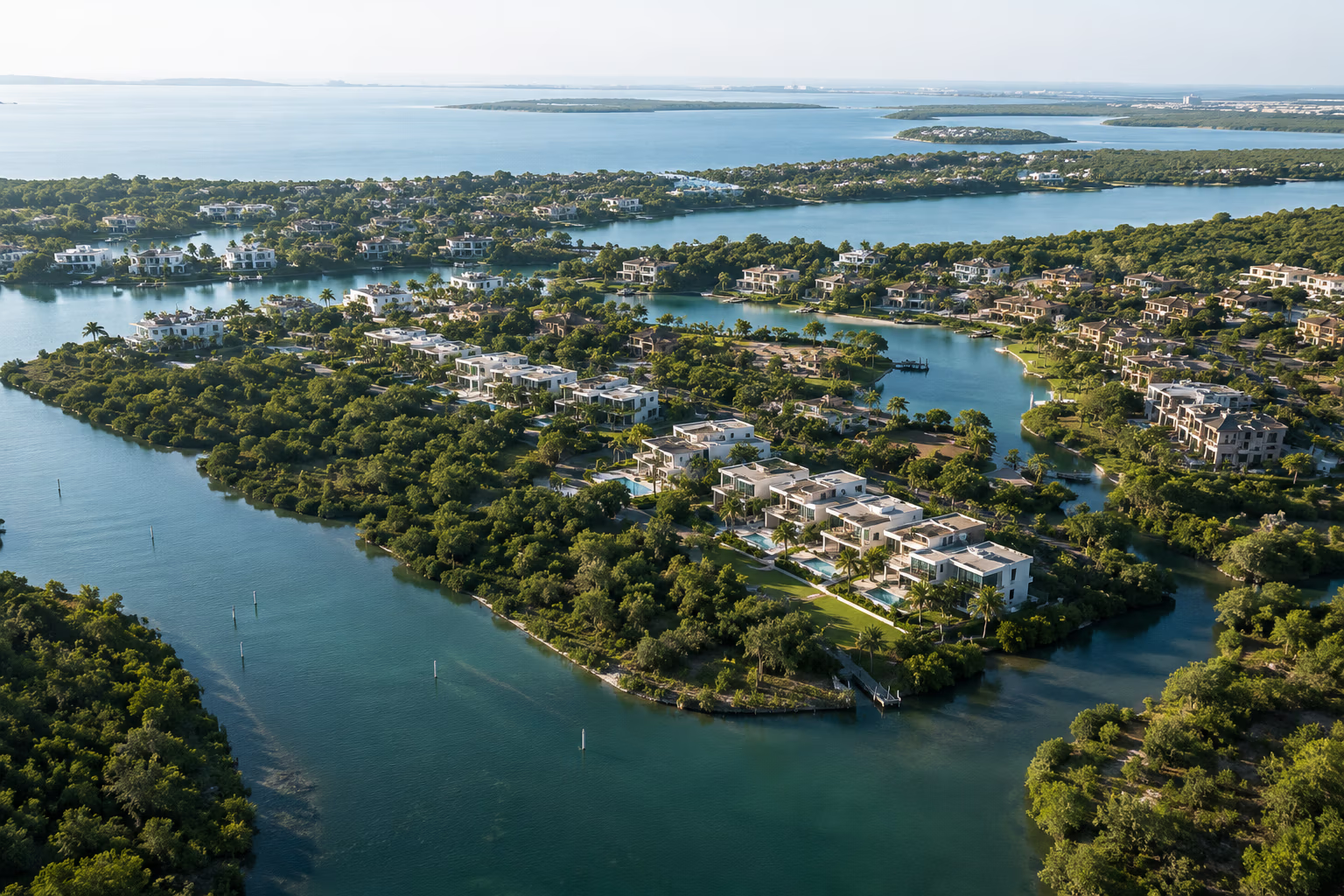
The island sits between Yas Island and Saadiyat Island and is being developed as a master-planned community surrounded by mangroves, waterways, nature trails and low-rise residential villages.
The official Jubail Island masterplan describes a project of approximately 40 million square metres, with only around 20% of the island developed, making it one of Abu Dhabi’s lowest-density residential environments. The wider project carries an estimated development value of around AED 15 billion and is planned for more than 10,000 residents.
That gives Jubail a very different investment thesis from:
- Reem Island;
- Yas Island;
- Saadiyat Island;
- Fahid Island;
- Hudayriyat Island.
Jubail’s strength is not scale.
It is:
**scarcity
- nature
- low density
- villa living
- long-term lifestyle demand.**
In 2026, the island is also moving beyond concept stage. Jubail Island reported that more than 1,000 homes had been completed and handed over by April 2026, giving investors increasingly tangible evidence of the community rather than only relying on future master-plan promises.
The question therefore is not simply:
“Is Jubail Island beautiful?”
It clearly is.
The more useful question is:
“Does this exact Jubail Island property offer enough scarcity, demand, quality and long-term value to justify its purchase price?”
This guide examines that question in detail.
Quick Answer: Is Jubail Island a Good Investment in 2026?
Jubail Island can be particularly attractive for buyers looking for:
- premium villas;
- low-density communities;
- nature-led living;
- mangrove and waterfront environments;
- long-term family demand;
- scarcity relative to high-density markets;
- a medium- to long-term holding strategy.
It may be less suitable for investors whose main objective is:
- maximum short-term rental yield;
- low entry cost;
- large apartment inventory;
- fast speculative resale.
Jubail is better understood as:
a premium low-density lifestyle and scarcity investment
rather than a pure yield market.
1. What Makes Jubail Island Different?
Jubail’s investment identity is rooted in its physical environment.
The official masterplan describes the island as a sanctuary positioned within rich mangrove biodiversity, with six principal villages and a wide range of planned community infrastructure.
That matters because many residential projects can replicate:
- towers;
- pools;
- gyms;
- landscaped podiums.
Far fewer can replicate:
- protected mangroves;
- very low development density;
- natural waterways;
- large villa plots;
- significant distance between buildings.
That scarcity can have long-term value.
2. Only Around 20% of the Island Is Developed
This is one of Jubail’s most important structural characteristics.
Jubail Island’s official FAQ states that only around 20% of the island is developed, with the rest largely preserved as natural land and mangrove landscape.
For investors, this can mean:
- lower building density;
- more natural surroundings;
- potentially greater privacy;
- less visual congestion;
- stronger lifestyle differentiation.
Low density is not automatically a financial advantage.
But in premium real estate, scarcity and space can support long-term end-user demand.
3. Jubail’s Position Between Yas and Saadiyat
Location also strengthens the investment case.
Jubail sits between two major Abu Dhabi destinations:
Yas Island
Known for:
- lifestyle;
- family communities;
- leisure;
- entertainment;
- golf.
Saadiyat Island
Known for:
- luxury;
- beachfront;
- cultural institutions;
- international prestige.
Jubail adds a third identity:
nature-led premium villa living.
That can appeal to buyers who want proximity to major destinations without living inside a high-traffic lifestyle district.
4. Jubail’s Six Villages
The official Jubail Island masterplan identifies six main communities:
- Marfaa Al Jubail;
- Nad Al Jubail;
- Seef Al Jubail;
- Souk Al Jubail;
- Ain Al Maha;
- Bada Al Jubail.
This matters because “Jubail Island” should not be treated as one homogeneous investment.
Different villages may vary by:
- waterfront position;
- plot size;
- villa type;
- community maturity;
- access;
- privacy;
- future supply.
Investors should analyse the specific village and property, not only the island brand.
5. More Than 1,000 Homes Delivered
In April 2026, Jubail Island announced that more than 1,000 homes had been completed and handed over.
That is an important transition.
Why?
Because the investment market can increasingly analyse:
- actual completed homes;
- physical quality;
- resident experience;
- rental demand;
- resale behaviour;
- operational community infrastructure.
That reduces some of the uncertainty associated with purely off-plan developments.
6. Ready Property Is Becoming More Important
For investors who prefer lower development risk, ready Jubail villas can offer:
- physical inspection;
- immediate occupancy;
- potential immediate rental;
- actual landscaping;
- observable neighborhood quality;
- clearer resale comparisons.
This is different from buying a future villa based primarily on renders.
7. Villa Investment Is Central to Jubail
Jubail is fundamentally a villa-led market.
That changes the investment analysis.
Villa investors should focus on:
- plot size;
- built-up area;
- waterfront position;
- landscaping;
- privacy;
- orientation;
- community location;
- maintenance.
The largest villa is not automatically the best investment.
8. Plot Size Matters
Premium villa buyers often value:
- outdoor space;
- gardens;
- pool;
- privacy;
- family areas.
A well-positioned plot can therefore have stronger resale appeal than a larger house squeezed into a weaker plot.
Compare:
Villa A
Large building
Small or awkward garden
Villa B
Slightly smaller building
Large usable plot
Better privacy
Many end users may prefer Villa B.
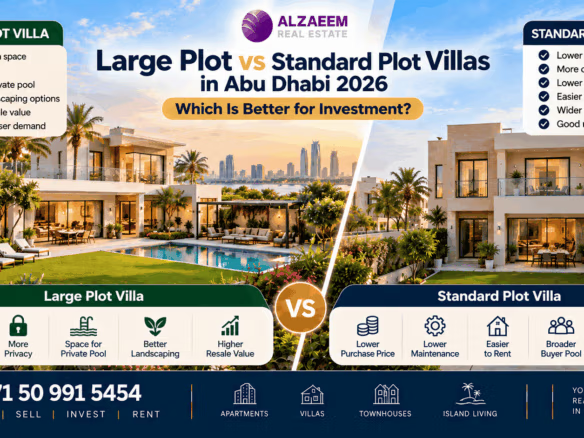
9. Mangrove View vs Waterfront
These terms should not be treated as interchangeable.
A property may offer:
- direct water frontage;
- mangrove frontage;
- internal canal;
- distant water view;
- natural landscape view.
Each should command a different premium.
10. Why Mangroves Matter
Mangrove frontage can offer:
- nature;
- privacy;
- distinctive views;
- less urban visual noise;
- stronger emotional appeal.
But investors should verify:
- whether the view is permanent;
- whether future development can obstruct it;
- how accessible the water actually is.
11. Waterfront Premium Example
Suppose:
Interior villa:
AED 6,500,000
Waterfront villa:
AED 8,000,000
Premium:
AED 1,500,000
Ask:
- how much extra rent?
- how much stronger future resale?
- how rare is direct frontage?
- does the property have better land as well as better view?
The waterfront premium may be justified.
But not automatically.
12. Jubail Is a Scarcity Market
One of the strongest investment arguments for Jubail is that the island’s character is difficult to replicate.
High-density markets can add thousands of similar apartments.
A low-density mangrove villa community has more physical constraints.
That can support long-term scarcity.
But scarcity only helps if buyers continue to value the product.
13. The End-User Buyer Is Important
Jubail’s long-term performance may depend heavily on:
- families;
- high-net-worth residents;
- lifestyle buyers;
- long-term Abu Dhabi residents;
- international buyers.
This is not purely an investor-to-investor resale market.
A strong end-user pool can make an asset more defensible.
14. Family Demand
Jubail’s official masterplan includes:
- schools;
- nurseries;
- sports facilities;
- supermarkets;
- community facilities;
- marinas;
- clinics.
That supports its family-oriented positioning.
For investors, family demand can be useful because family tenants may prefer:
- longer leases;
- stable communities;
- larger homes.
15. Rental Yield on Jubail
Jubail should not automatically be expected to outperform apartment markets on percentage yield.
Premium villas usually have:
- higher purchase prices;
- higher maintenance;
- smaller tenant pools.
But the investment may combine:
rent + scarcity + lifestyle + long-term value.
16. Gross Yield Example
Suppose:
Villa price:
AED 7,500,000
Annual rent:
AED 375,000
Gross yield:
5.0%
That may look reasonable.
But operating costs matter.
17. Net Yield Example
Assume:
Maintenance reserve:
AED 35,000
Landscaping:
AED 12,000
Pool:
AED 10,000
Management:
AED 18,750
Vacancy:
AED 14,250
Other recurring costs:
AED 10,000
Net annual income:
AED 275,000
Net yield:
3.67%
For a pure income investor, this may not be compelling.
For a long-term scarcity investor, it may still make sense.
18. Villa Maintenance Can Be Significant
Villa ownership can involve:
- AC maintenance;
- landscaping;
- irrigation;
- pool service;
- waterproofing;
- exterior maintenance;
- pest control;
- larger repair bills.
Never calculate rental return using:
rent − zero costs.
19. Landscaping Costs
A large garden adds lifestyle value.
But it also creates:
- water use;
- gardening;
- irrigation maintenance;
- seasonal replacement.
If the property is rented, decide whether:
- owner pays;
- tenant pays;
- service arrangement is included.
20. Private Pool Economics
A pool may improve:
- tenant demand;
- resale appeal;
- personal use.
But it also requires:
- maintenance;
- chemicals;
- electricity;
- repairs.
Its investment value depends on the buyer profile.
21. Ready vs Off-Plan on Jubail
Jubail now offers a more interesting mix than a few years ago.
With 1,000+ homes delivered, investors can increasingly compare:
Ready
- existing community;
- observable quality;
- immediate use.
Newer / Under Development
- future phases;
- potentially different pricing;
- more master-plan upside.
The right strategy depends on risk tolerance.
22. Ready Property Advantage
Ready property lets you ask:
Would I actually want to live here?
That matters in lifestyle markets.
You can inspect:
- road widths;
- landscaping;
- view;
- privacy;
- beach/mangrove access;
- noise;
- community feel.
Those factors strongly influence future buyers.
23. Off-Plan Risk
Off-plan Jubail buyers still need to analyse:
- payment plan;
- handover;
- completion;
- future supply;
- resale restrictions.
Read:
24. Payment Plan Example
Suppose:
Villa price:
AED 8m
Booking:
10%
Construction:
40%
Handover:
50%
That means a final:
AED 4 million
must eventually be funded.
Do not focus only on the 10% booking.
25. Handover Funding
For large villas, handover funding risk can be significant.
Plan early:
- cash;
- mortgage;
- sale of another asset;
- investment portfolio liquidity.
If you cannot fund handover, your strategy may depend too much on resale.
26. Mortgage Financing
Mortgage investors need to consider:
- bank valuation;
- borrower eligibility;
- LTV;
- total equity;
- interest.
Premium villa purchases create large absolute financing needs.
Read:
Abu Dhabi Mortgage Pre-Approval Guide
27. ADIB Partnership
In April 2026, Abu Dhabi Islamic Bank and Jubail Island Investment Company announced a strengthened financing partnership. Jubail Island stated that ADIB had financed the project from inception and signed a new MoU to enhance financing services for customers buying within Jubail Island developments.
That does not mean every buyer is automatically financed.
But it does demonstrate an established institutional financing relationship around the project.
28. Bank Valuation Example
Agreed purchase:
AED 7m
Bank valuation:
AED 6.5m
Difference:
AED 500k.
If financing is based on the lower value, the buyer needs more cash.
Read:
How Property Valuation Works in Abu Dhabi
29. Liquidity
Villa markets usually have lower transaction volume than apartment markets.
Why?
Because ticket sizes are larger.
A AED 1.5m apartment can attract many buyers.
A AED 10m villa attracts fewer.
That means Jubail investors should generally be prepared for:
longer resale timelines.
30. Liquidity Is Not the Same as Quality
A rare premium villa may still be an excellent asset.
It may simply require more time to sell.
Investors need to distinguish:
- asset quality;
- sale speed.
31. Holding Period
Jubail is generally better suited to:
medium- to long-term ownership
than short-term speculation.
A longer holding period allows:
- community maturity;
- lifestyle infrastructure;
- scarcity value;
- rental income;
- capital growth.
32. Five-Year Investment Scenario
Purchase:
AED 7m
Net annual rent:
AED 250k
Five years:
AED 1.25m
Resale:
AED 8.2m
Capital gain:
AED 1.2m
Simplified combined outcome:
AED 2.45m
before financing, transaction and selling costs.
Illustrative only.
33. Flat-Market Scenario
Purchase:
AED 7m
Five-year net rent:
AED 1.25m
Resale:
AED 7m
Capital appreciation:
zero.
The investment still generated income.
34. Downside Scenario
Resale:
AED 6.5m
Capital loss:
AED 500k
Rental income:
AED 1.25m
Simplified outcome:
AED 750k positive before other costs.
This illustrates why rental income still matters in a growth/scarcity strategy.
35. But What If Rent Is Lower?
Expected rent:
AED 350k
Actual rent:
AED 300k
Your economics change materially.
Stress-test the property before buying.
36. Jubail vs Saadiyat
This is an important premium comparison.
Saadiyat
Strengths:
- established luxury identity;
- beachfront;
- culture;
- international recognition.
Jubail
Strengths:
- lower density;
- nature;
- mangroves;
- villa privacy.
Saadiyat is more prestige-led.
Jubail is more nature-led.
37. Jubail vs Yas
Yas
- broader family market;
- lifestyle infrastructure;
- entertainment;
- larger property variety.
Jubail
- quieter;
- lower-density;
- natural environment;
- villa focus.
Families can prefer either depending on lifestyle.
38. Jubail vs Hudayriyat
Both can appeal to villa investors.
Hudayriyat
- emerging premium development;
- leisure;
- modern growth story.
Jubail
- mature nature identity;
- mangroves;
- low-density positioning;
- more completed homes.
Different investment personalities.
39. Jubail vs Fahid
Both sit in the broader Yas–Saadiyat corridor.
Fahid
- wellness;
- newer masterplan;
- apartments/townhouses/premium coastal residences.
Jubail
- villas;
- mangroves;
- low-density nature.
Fahid may have broader unit formats.
Jubail is more villa-specific.
40. Jubail vs Reem
These are almost opposite investment models.
Reem
- high-density;
- apartments;
- yield;
- liquidity.
Jubail
- low-density;
- villas;
- scarcity;
- long-term lifestyle.
A pure income investor may prefer Reem.
A wealth-preservation villa buyer may prefer Jubail.
41. Property Selection Matters More Than Island Reputation
Even within Jubail:
- village;
- plot;
- view;
- orientation;
- road position;
can materially affect performance.
The island brand is only the first layer.
42. Plot Orientation
Orientation can influence:
- sunlight;
- garden comfort;
- heat;
- view;
- privacy.
A good villa layout on a poor plot can still disappoint.
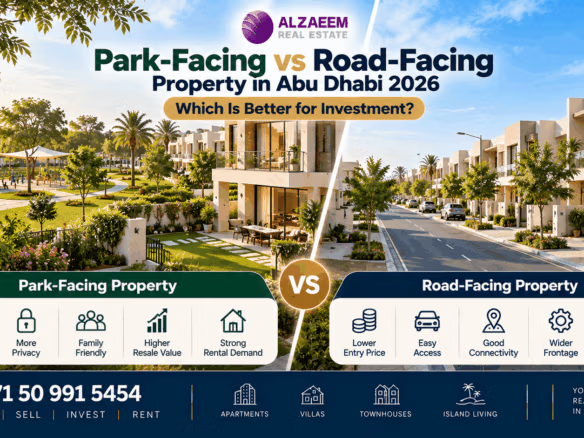
43. Road Position
Compare:
Quiet internal street
More privacy.
Main access road
Potentially easier access but more traffic.
Waterfront cul-de-sac
Potential scarcity.
Location within the village matters.
44. View Protection
If you are paying a premium for:
- mangroves;
- water;
- open land;
ask whether the view can be obstructed.
Protected views are more valuable.
45. Community Maturity
With more than 1,000 homes handed over, Jubail’s community is becoming increasingly established.
That can reduce uncertainty around:
- resident demand;
- landscaping;
- infrastructure;
- quality of life.
46. Amenities
The official project includes or plans:
- beach club;
- sports centre;
- business centre;
- schools;
- supermarkets;
- nurseries;
- marinas;
- community club;
- specialised clinics.
These amenities strengthen end-user appeal.
But they do not automatically increase investment returns.
47. Mangrove Park and Existing Facilities
Jubail’s official FAQ lists existing facilities including:
- Jubail Island Mangrove Park;
- Crane Café;
- Spinneys;
- sports courts;
- jogging and cycling paths.
This helps distinguish Jubail from a purely future masterplan.
48. Golden Visa Strategy
Many Jubail villas will sit well above the UAE real-estate investor Golden Visa threshold.
But the same principle applies:
buy a good villa first; treat the visa as additional value.
Read:
Golden Visa Through Abu Dhabi Property
49. Overseas Investors
Jubail can appeal strongly to international buyers seeking:
- premium villa;
- nature;
- privacy;
- Abu Dhabi lifestyle.
But overseas owners need robust management.
50. Remote Ownership
Remote villa ownership can require:
- property management;
- pool maintenance;
- landscaping;
- tenant management;
- inspections.
Complexity is a cost.
Read:
Can You Buy Abu Dhabi Property Remotely?
51. Best Jubail Strategy for Capital Preservation
Look for:
- true scarcity;
- strong plot;
- protected natural view;
- quality construction;
- sensible purchase price.
Do not chase size alone.
52. Best Strategy for Rental
Prioritise:
- family-friendly layouts;
- practical bedrooms;
- manageable maintenance;
- accessible village;
- realistic rent.
53. Best Strategy for Lifestyle
Prioritise:
- nature;
- privacy;
- garden;
- waterfront/mangrove view;
- outdoor spaces.
Personal use changes the investment equation.
54. Best Strategy for Long-Term Growth
Look for:
- differentiated property;
- low competing supply;
- strong community maturity;
- desirable location within village.
55. Jubail Investor Scorecard
| Factor | Score |
|---|---|
| Plot Quality | /5 |
| View | /5 |
| Privacy | /5 |
| Villa Layout | /5 |
| Village Location | /5 |
| Entry Price | /5 |
| Rental Demand | /5 |
| Maintenance | /5 |
| Scarcity | /5 |
| Resale Liquidity | /5 |
| Community Maturity | /5 |
| Long-Term Potential | /5 |
Maximum:
60
56. 20 Questions Before Buying Jubail Property
- Which village is the property in?
- Is it ready or off-plan?
- What is the plot size?
- What is the built-up area?
- Is the view mangrove, water or internal?
- Is the view protected?
- What is the road position?
- How private is the villa?
- What maintenance is required?
- Is there a pool?
- Who maintains the landscaping?
- What is the realistic rent?
- What is net yield?
- What are comparable transactions?
- How much similar future supply exists?
- Who is the likely tenant?
- Who is the future buyer?
- How liquid is this price bracket?
- Would I still buy if prices stay flat?
- Would I still buy if rent is 10% lower?
57. Jubail Red Flags
Buying Only Because It Is “Nature”
Nature does not justify any price.
Paying Too Much for a View
Verify actual scarcity.
Ignoring Maintenance
Villa costs are real.
Assuming Large Plot Means Better Investment
Layout and location matter too.
Short Holding Period
Luxury villas can require time to sell.
58. Positive Signals
Stronger properties may offer:
- excellent plot;
- protected mangrove/water view;
- efficient floor plan;
- strong privacy;
- realistic price;
- completed community context;
- limited direct competition.
59. Is Jubail Expensive?
Jubail is a premium market.
But “expensive” and “overpriced” are not the same.
A high price may be justified by:
- plot;
- nature;
- scarcity;
- build quality.
A lower-priced property can still be worse value.
60. Is Jubail Better Than Saadiyat?
For:
nature + privacy + low-density villas
Jubail may be stronger.
For:
beachfront prestige + culture
Saadiyat may be stronger.
61. Is Jubail Better Than Hudayriyat?
For:
mature nature identity
Jubail.
For:
new premium growth story
Hudayriyat may appeal more.
62. Is Jubail Better Than Fahid?
For:
villa scarcity
Jubail.
For:
wellness-led mixed residential product
Fahid may be broader.
63. Current Abu Dhabi Market Context
The broader market remains supportive.
ADREC reported AED 117 billion in total transactions during H1 2026, with transaction value up 112% year-on-year.
The market also continues to attract substantial international investment.
That is a positive backdrop for premium communities.
But it does not guarantee individual property performance.
64. Why Strong Markets Increase the Need for Discipline
When a market is strong, buyers may fear missing out.
That can lead to:
- overpaying;
- rushed decisions;
- weak due diligence.
A rising market does not eliminate valuation.
It makes valuation more important.
65. Frequently Asked Questions
Is Jubail Island a good investment in 2026?
It can be particularly attractive for buyers seeking premium villas, low-density living, mangrove surroundings and long-term scarcity.
Who is developing Jubail Island?
The official Jubail Island site identifies LEAD Development as the developer and manager of the master-planned project.
How large is Jubail Island?
The official project information states approximately 40 million square metres.
How much of Jubail Island is developed?
The official FAQ states around 20%, supporting its low-density positioning.
How many homes have been delivered?
Jubail Island announced more than 1,000 homes completed and handed over by April 2026.
Is Jubail mainly villas?
Jubail is strongly villa-led and positioned around low-density residential communities.
Is Jubail good for rental income?
Potentially, but its stronger investment case is typically scarcity, lifestyle and long-term value rather than maximum percentage yield.
Is Jubail suitable for families?
Its masterplan includes schools, nurseries, sports facilities, retail and community services, making family demand an important part of its positioning.
Can Jubail property support Golden Visa eligibility?
Qualifying property ownership may potentially support the UAE property-investor Golden Visa route, subject to current official requirements.
Final Verdict: Who Is Jubail Island Really For?
Jubail Island is one of Abu Dhabi’s most distinctive low-density premium villa markets.
Its strongest characteristics are:
**nature
- mangroves
- privacy
- land
- low density
- scarcity.**
Official project information describes a 40 million sqm masterplan with only around 20% development intensity, while more than 1,000 homes had already been handed over by April 2026.
That gives Jubail a rare combination:
natural scarcity + increasing community maturity.
But the island is not designed for every investor.
For someone seeking:
- studio yield;
- low entry cost;
- fast transaction volume;
Reem may be more appropriate.
For someone seeking:
- villa privacy;
- natural surroundings;
- long-term ownership;
- premium family demand;
Jubail deserves serious consideration.
The investment quality ultimately comes down to:
village
→ plot
→ villa
→ view
→ price
→ maintenance
→ future buyer.
The island provides scarcity.
The exact property determines whether you benefit from it.
Continue Your Research
Best Areas to Invest in Abu Dhabi 2026
Saadiyat vs Yas vs Reem Island
Saadiyat Island Property Investment Guide
Yas Island Property Investment Guide
Al Reem Island Property Investment Guide
Hudayriyat Island Property Investment Guide
Fahid Island Property Investment Guide
Abu Dhabi Real Estate Knowledge Hub
Explore Jubail Island
Speak with Al Zaeem Real Estate
+971 (50) 991 5454
Last reviewed: August 2026.
This guide provides general educational information and does not constitute investment, legal, financial, mortgage, tax or immigration advice. Villa prices, rents, maintenance costs, financing and resale conditions vary by property and market conditions. Worked examples are illustrative rather than forecasts. Verify property-specific transaction data, contracts, financing and current project information before investing.