


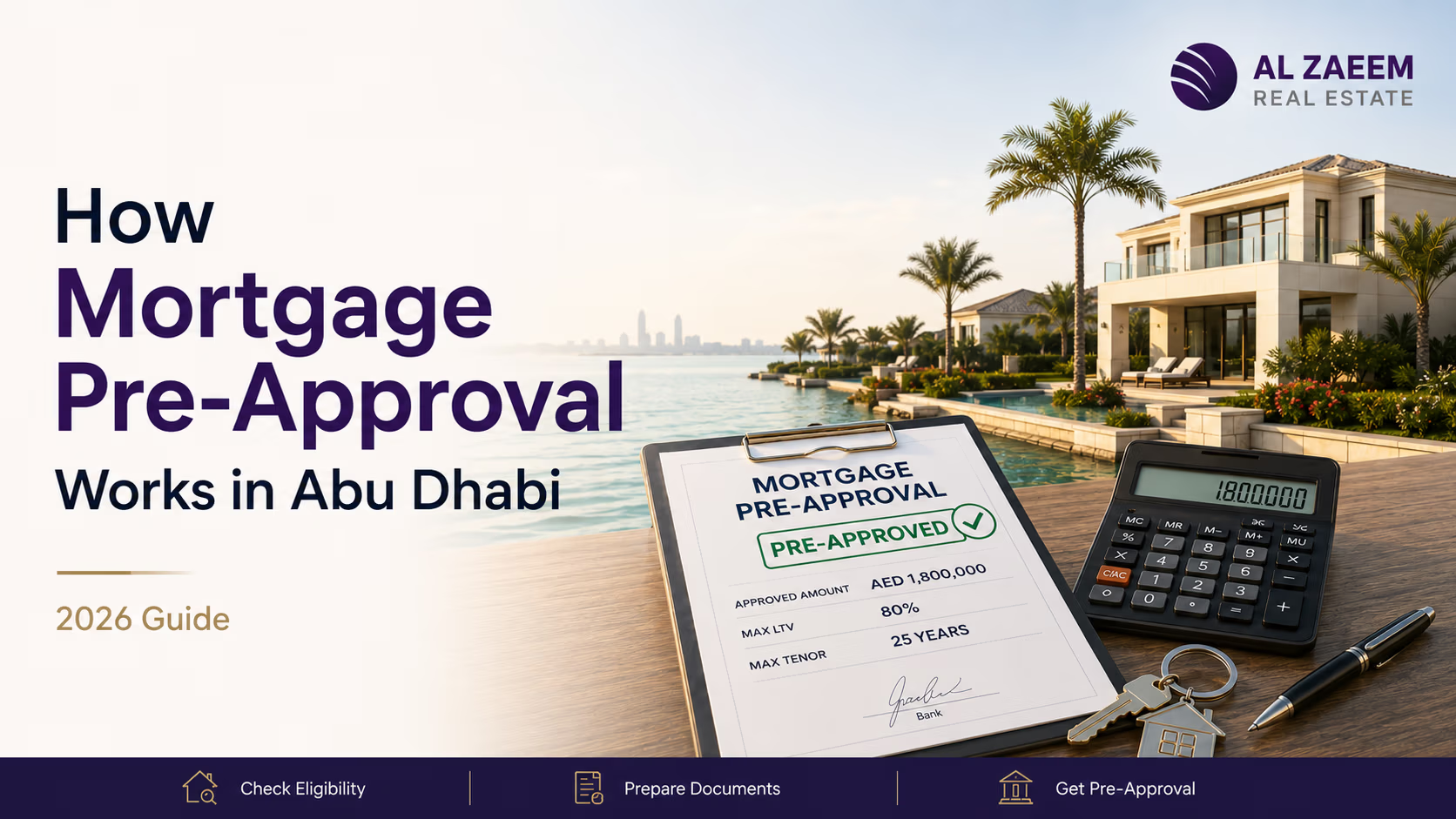
Mortgage pre-approval helps you understand how much a lender may be willing to finance before you commit to a specific Abu Dhabi property.
It can help answer questions such as:
- How much can I realistically borrow?
- What price range should I search in?
- How much cash will I need?
- What monthly payment could I afford?
- Will my income and existing debts support the mortgage?
But one distinction is critical:
Mortgage pre-approval is not final mortgage approval.
The bank still needs to assess the actual property, verify your final documents and complete its underwriting before funds are released.
The UAE Central Bank also sets regulatory limits around mortgage lending, including maximum Loan-to-Value ratios and mortgage tenor. For example, under the current framework, expatriate first-home owner-occupiers can generally receive financing up to 80% of property value where the property is AED 5 million or below, while different limits apply to other categories.
Quick Answer
Mortgage pre-approval is an initial lender assessment of your ability to obtain a home loan.
The bank usually reviews factors such as:
- income;
- employment or business profile;
- existing loans;
- monthly obligations;
- credit history;
- age;
- residency status;
- intended property type;
- requested loan amount.
If the bank is satisfied, it may issue a pre-approval stating the approximate financing amount and conditions it could consider.
But the property itself still has to qualify.
That means:
Pre-approval = borrower assessment
Property valuation = asset assessment
Final mortgage approval = borrower + property + final documentation
1. What Is Mortgage Pre-Approval?
Mortgage pre-approval is an early-stage assessment performed by a bank or mortgage provider before final property financing.
The lender considers whether your financial profile appears capable of supporting a requested mortgage.
The result can help establish a realistic buying budget.
For example:
You may think you can purchase a property worth:
AED 3,000,000
But after assessing income and debt obligations, the lender may indicate that your practical financed buying capacity is closer to:
AED 2,300,000
It is better to know that before paying a non-refundable reservation amount.
2. Is Pre-Approval the Same as Final Approval?
No.
This is the most important distinction.
Pre-approval generally tells you:
“Based on the information currently available, we may be willing to lend approximately this amount.”
Final approval requires the lender to be satisfied with:
- your updated financial position;
- the property;
- valuation;
- legal/title status;
- final sale documentation;
- internal lending requirements.
So never tell a seller:
“The bank has definitely approved everything”
when you only have preliminary approval.
3. Why Get Pre-Approval Before Property Hunting?
Because it gives you a realistic price range.
Without pre-approval, you might spend weeks viewing:
- AED 4 million villas;
- AED 3 million waterfront apartments;
- luxury golf-front homes;
only to discover that your bank-financed budget is AED 2 million.
Pre-approval lets you search with more discipline.
Browse Abu Dhabi properties for sale once you understand your financing range.
4. Pre-Approval Can Strengthen Your Offer
A seller may prefer a buyer who already understands their financing position.
Compare:
Buyer A
“I like the property. I’ll speak to a bank later.”
Buyer B
“I already have mortgage pre-approval and understand my required cash contribution.”
Buyer B may appear more transaction-ready.
Pre-approval does not guarantee completion, but it can demonstrate preparation.
5. What Does the Bank Assess?
A lender may review several dimensions of borrower risk.
Common areas include:
- employment;
- income stability;
- salary;
- business income;
- existing loans;
- credit cards;
- current mortgage obligations;
- age;
- residency status;
- requested tenor;
- down payment.
The exact underwriting method varies between lenders.
There is no one universal Abu Dhabi bank approval formula.
6. Income Is Only One Part of the Decision
A high salary does not automatically mean unlimited borrowing.
Suppose:
Monthly salary:
AED 50,000
But the borrower already pays:
- AED 8,000 personal loan;
- AED 4,000 vehicle loan;
- AED 3,000 other credit obligations.
The lender looks at total repayment commitments, not salary alone.
7. Debt Burden Ratio Matters
UAE lending regulations limit the amount of a borrower’s income that can be committed to debt repayments.
Central Bank guidance states that total installments together with other repayments should not exceed the applicable 50% debt-burden threshold for individual borrowers under the relevant regulations.
In practical terms, the bank considers:
existing debt + proposed mortgage payment
against:
eligible income.
8. Simple Debt-Burden Example
Suppose:
Monthly eligible income:
AED 40,000
50%:
AED 20,000
Existing monthly debt payments:
AED 6,000
That leaves approximately:
AED 14,000
of theoretical monthly repayment capacity before other lender-specific underwriting considerations.
This is only an illustration.
The bank’s actual calculation may differ based on its policies and what income or liabilities it recognizes.
9. Loan-to-Value Is Different From Affordability
Two separate tests can restrict your mortgage.
Affordability
How much can you afford to repay?
Loan-to-Value — LTV
How much of the property value can the lender finance?
You must satisfy both.
10. What Is Loan-to-Value?
Loan-to-Value measures the mortgage relative to the property’s value.
Formula:
Mortgage Amount ÷ Property Value × 100
Example:
Property value:
AED 2,000,000
Mortgage:
AED 1,600,000
LTV:
80%
Your equity contribution:
20%
before transaction costs.
11. Expatriate First-Home LTV Limits
Under the Central Bank’s current mortgage framework, for expatriate first-house / owner-occupier borrowers:
For a property valued at AED 5 million or below, maximum LTV is currently:
80%
For a property valued above AED 5 million:
70%.
These are regulatory ceilings, not promises that every bank will lend the maximum.
12. UAE National First-Home LTV Limits
For qualifying UAE national first-house / owner-occupier borrowers, the Central Bank’s current maximum LTV framework allows:
85% for property valued at AED 5 million or below.
75% where the property value exceeds AED 5 million.
Again, lenders can apply stricter internal criteria.
13. Investment Property Can Have Different LTV
A second home or investment property may be financed differently from a qualifying first owner-occupied home.
That is why buyers should not hear:
“Mortgages go to 80%”
and assume that percentage automatically applies to them.
Ask the lender:
- Is this my first property?
- Is it owner occupied?
- Is it an investment?
- Which LTV category applies?
14. Off-Plan Mortgage LTV Is More Conservative
The Central Bank’s mortgage regulations currently set a maximum LTV of 50% for off-plan properties, regardless of purchaser category, reflecting the higher completion risk associated with properties still under development.
That is materially different from financing a completed home.
Browse current Abu Dhabi off-plan properties, but confirm financing before relying on a future mortgage.
15. Not Every Off-Plan Property Is Mortgageable at Every Stage
Even though mortgage regulation allows financing within defined limits, whether a specific project can actually be financed can depend on:
- development stage;
- lender;
- developer;
- project approval;
- payment schedule;
- handover status.
Do not assume a bank will finance every off-plan project simply because the property is being sold in Abu Dhabi.
16. Maximum Mortgage Tenor
The UAE Central Bank’s mortgage rules set the maximum mortgage tenor at:
25 years.
The actual term offered may be shorter depending on:
- borrower age;
- bank policy;
- financial profile;
- property.
17. Age Can Affect Loan Term
Banks determine maximum borrower age at final repayment according to their risk-management and lending policies within the regulatory framework.
For example, a buyer might qualify financially for a mortgage but receive:
15 years
rather than:
25 years
because of age-related lender policy.
A shorter tenor produces a higher monthly payment.
18. Mortgage Term Changes Monthly Payment
Consider the same loan:
AED 1,500,000
A longer loan term generally reduces monthly installments but increases the length of time over which financing costs are paid.
A shorter term generally increases monthly payments but reduces the repayment period.
ADREC provides a dedicated Mortgage Calculator for estimating monthly installments and transaction-related costs.
19. ADREC’s Mortgage Calculator Is Useful for Planning
ADREC’s current calculator allows buyers to estimate:
- property value;
- loan amount;
- down payment;
- monthly payment;
- total payment;
- transaction costs.
Its published transaction breakdown also includes items such as:
- transaction fees;
- brokerage;
- developer NOC fees;
- conveyancing/legal fees;
- closeout of service charges.
This makes it useful for preliminary budgeting.
20. Calculator Estimate Is Not Bank Approval
A mortgage calculator performs mathematics.
A bank performs underwriting.
They are different.
You might calculate that an AED 2 million mortgage produces a manageable monthly payment.
But the bank could still decline based on:
- debt burden;
- credit profile;
- employment;
- property;
- documentation.
Use calculators for planning—not as proof of approval.
21. What Documents May Banks Ask For?
Requirements differ by lender and borrower profile.
A salaried applicant may typically need documents related to:
- passport;
- Emirates ID;
- visa;
- salary certificate;
- bank statements;
- employment information;
- existing liabilities.
A self-employed buyer may face additional requirements relating to:
- company documents;
- financial statements;
- business banking;
- ownership records.
Ask the lender for its current checklist before applying.
22. Self-Employed Buyers Can Face Different Underwriting
A business owner may earn substantially more than a salaried employee but still have to provide more evidence.
The bank may need to understand:
- sustainability of earnings;
- business history;
- cash flows;
- company ownership;
- audited accounts where applicable.
So business income should not be treated identically to monthly payroll income.
23. Credit History Matters
Banks evaluate credit risk.
Existing behavior with:
- loans;
- credit cards;
- missed payments;
- outstanding obligations
may affect the application.
A borrower should review and organize financial obligations before seeking a large mortgage rather than discovering issues during the property transaction.
24. Reduce Unnecessary Debt Before Applying
Suppose your monthly commitments include a large personal loan with only a small balance remaining.
Paying down or restructuring certain obligations may improve your mortgage affordability.
But do not make financial changes blindly.
Understand:
- settlement fees;
- liquidity needs;
- bank methodology.
Cash used to clear debt is also cash no longer available for your property down payment.
25. Down Payment Is Not Your Only Cash Requirement
This is one of the biggest mistakes buyers make.
Suppose:
Property value:
AED 2,000,000
Mortgage:
80% = AED 1,600,000
Down payment:
AED 400,000
You may think:
“I need AED 400,000.”
But there may also be:
- registration;
- transaction fees;
- valuation;
- bank fees;
- mortgage registration;
- brokerage;
- NOC;
- service-charge adjustments.
Read our Abu Dhabi Property Fees & Closing Costs Guide.
26. Pre-Approval Should Include a Cash Plan
You need three numbers:
Maximum property price
Likely mortgage
Total cash required
Example:
Property price:
AED 2,500,000
Expected mortgage:
AED 2,000,000
Equity:
AED 500,000
Additional transaction expenses:
AED ___
Total required cash:
AED 500,000 + costs
That is your real buying budget.
27. Pre-Approval Before Reservation Agreement
This is where our previous guide becomes important.
If you sign a reservation and pay a non-refundable amount before confirming financing, you can create unnecessary risk.
Read:
Reservation Agreement vs SPA in Abu Dhabi
Mortgage failure does not automatically mean your reservation payment will be refunded.
The signed terms matter.
28. Make Financing a Due-Diligence Item
Before booking a property, ask:
- Is my mortgage pre-approved?
- How long is the approval valid?
- What assumptions is it based on?
- Is this property type financeable?
- Is there a minimum salary?
- What LTV category applies?
- What are my fees?
Do not make financing an afterthought.
29. Pre-Approval Can Expire
Pre-approval is usually not indefinite.
Banks can set a validity period.
If your property search takes too long, the lender may require:
- updated salary documents;
- new bank statements;
- refreshed credit checks;
- reapproval.
Ask the bank for the exact validity period rather than relying on a generic market assumption.
30. A Change in Your Finances Can Affect Approval
Between pre-approval and final mortgage approval, avoid major financial changes without understanding their effect.
Examples:
- taking a new personal loan;
- financing a new vehicle;
- increasing credit balances;
- changing employer;
- significant income reduction.
The bank may reassess you before final drawdown.
31. Changing Jobs Can Matter
A buyer might receive pre-approval and then change jobs before completing the purchase.
That could affect:
- income verification;
- employment stability;
- probation status;
- lender assessment.
If a job change is planned during a property transaction, discuss it with the lender first.
32. Pre-Approval Does Not Approve the Property
Suppose the bank pre-approves you for:
AED 1,500,000
You then choose a property.
The bank still needs to assess that property.
That typically includes valuation and legal/property checks.
This is where many buyers misunderstand the process.
33. Property Valuation Happens Later
The lender needs to determine whether the property provides acceptable security for the mortgage.
Read our How Property Valuation Works in Abu Dhabi Guide.
The bank’s assessed value can affect your final loan amount.
34. What If Bank Valuation Is Lower Than Purchase Price?
Example:
Purchase price:
AED 2,000,000
Bank valuation:
AED 1,800,000
If your applicable financing is 80% of valuation:
80% × AED 1.8m = AED 1.44m
Your cash requirement could therefore become:
AED 560,000
before transaction costs.
That is much higher than the AED 400,000 down payment you may initially have expected.
35. This Is Called a Valuation Gap
A valuation gap is effectively the difference between:
agreed purchase price
and
value recognized by the lender
when the lender will not finance the higher amount.
The buyer typically needs to:
- contribute more cash;
- renegotiate price;
- reconsider the purchase.
Never assume the bank will finance a seller’s asking price.
36. Pre-Approval Does Not Fix the Interest Rate Forever
Depending on lender and product, the rate offered at final mortgage stage may depend on:
- product structure;
- prevailing benchmark/rates;
- fixed vs variable period;
- customer relationship;
- lender pricing.
Read the final mortgage offer carefully.
Do not choose a mortgage solely on the first advertised percentage.
37. Compare the Effective Cost of Financing
Ask about:
- interest/profit rate;
- fixed period;
- variable period;
- arrangement fee;
- valuation fee;
- insurance;
- mortgage registration;
- early settlement;
- refinancing conditions.
Two mortgages with similar headline rates may have different overall economics.
38. Fixed vs Variable Mortgage
A fixed-rate period can give payment certainty for a defined time.
A variable-rate structure can change according to the applicable benchmark and lender margin.
The right choice depends on:
- risk tolerance;
- expected ownership period;
- rate environment;
- repayment strategy.
Mortgage terms should be evaluated over the period you realistically expect to keep the loan.
39. Do Not Choose a 25-Year Mortgage Just Because It Is Available
Maximum tenor does not mean optimal tenor.
A longer term can improve monthly affordability.
But you should also compare:
- total financing cost;
- early settlement plans;
- investment return;
- income stability.
The correct term depends on your finances.
40. Mortgage Registration Comes After Financing Approval
Once financing proceeds into completion, the mortgage itself needs to be formally registered against the property.
ADREC currently provides mortgage registration, release and modification services through its real-estate platform.
This is another distinction:
bank approval ≠ registered mortgage
Formal transaction steps still follow.
41. Mortgage Registration Has Costs
Abu Dhabi’s transaction framework includes mortgage-related fees in addition to lender costs.
You should therefore budget separately for:
- lender fees;
- valuation;
- mortgage registration;
- transaction processing.
Read our Property Fees & Closing Costs Guide.
42. Ready Property vs Off-Plan Mortgage
Ready Property
The completed asset can be inspected and valued immediately.
Off-Plan Property
The unit may still be under construction and financing is subject to more conservative regulatory LTV limits and project/lender availability. The Central Bank’s current maximum off-plan LTV is 50%.
Do not assume both transactions can use the same mortgage plan.
43. Buying a Tenanted Property With a Mortgage
A tenanted property can also be mortgaged, subject to lender requirements.
Tell the bank:
- property is rented;
- lease amount;
- lease expiry;
- intended use.
Lenders may treat investment property differently from first-home owner occupancy.
Read our Tenanted Property Guide.
44. Does Existing Rental Income Help?
Potentially.
But whether the bank recognizes all or part of rental income depends on lender policy and documentation.
Do not add:
AED 120,000 annual rent
to your income calculation yourself and assume the lender will do exactly the same.
Ask how rental income is treated.
45. Buying Through a Company
Corporate property financing is not necessarily the same as an individual residential mortgage.
A legal entity may face a different financing structure, underwriting process and documentation.
Read our Company Property Ownership Guide.
46. Joint Mortgage Applicants
Two buyers may potentially combine financial profiles where the lender allows joint borrowing.
The lender can assess:
- both incomes;
- both debts;
- both credit profiles;
- ownership structure.
Do not assume adding another applicant automatically improves approval.
Their liabilities matter too.
Read our Abu Dhabi Joint Ownership Guide.
47. Overseas Buyers and Mortgages
Non-resident or overseas-buyer financing can differ significantly from standard UAE-resident mortgage products.
Eligibility, LTV and documentation can depend on:
- nationality/residency;
- country of income;
- bank;
- property.
Do not use a resident first-home LTV assumption for a non-resident transaction unless the bank confirms it.
For remote purchasing generally, read our Buy Abu Dhabi Property Without Visiting the UAE Guide.
48. Pre-Approval Before Making an Offer: Best Sequence
A strong financed-buying journey looks like:
1. Review finances
↓
2. Obtain mortgage pre-approval
↓
3. Define property budget
↓
4. Search properties
↓
5. Negotiate
↓
6. Reservation / sale documentation
↓
7. Bank valuation
↓
8. Final mortgage approval
↓
9. Transfer and mortgage registration
↓
10. Ownership
That sequence reduces avoidable financing surprises.
49. Mortgage Pre-Approval Checklist
Before applying:
- Calculate available down payment
- Keep transaction costs separately
- Review monthly income
- Review existing debts
- Check credit obligations
- Avoid unnecessary new borrowing
- Gather identification documents
- Gather salary/employment evidence
- Gather bank statements
- Prepare business documents if self-employed
- Decide owner-occupied vs investment
- Decide ready vs off-plan
- Estimate property price range
- Compare lenders
- Compare rates
- Compare arrangement fees
- Compare valuation costs
- Ask which LTV applies
- Ask maximum tenor
- Confirm approval validity
- Understand conditions
- Do not reserve beyond your affordability
- Keep additional cash for valuation gap
- Do not assume pre-approval equals final approval
- Reconfirm finances before transfer
Common Mortgage Pre-Approval Mistakes
Property Shopping Before Knowing Your Budget
Get financing clarity first.
Thinking Pre-Approval Guarantees the Mortgage
It does not.
Forgetting the Down Payment
LTV caps require borrower equity.
Forgetting Closing Costs
Mortgage does not mean zero upfront cash.
Ignoring Existing Debt
Debt burden affects affordability.
Taking New Loans After Pre-Approval
Your financial profile can change.
Assuming the Bank Will Value the Property at Purchase Price
It may not.
Treating Mortgage Calculator Results as Approval
A calculator is only a planning tool.
Assuming Every Buyer Gets 80% Financing
LTV depends on borrower/property category.
Assuming Off-Plan Has the Same LTV as Ready Property
Current regulatory maximum for off-plan is 50%.
Frequently Asked Questions
What is mortgage pre-approval in Abu Dhabi?
It is an initial lender assessment indicating how much mortgage financing a borrower may qualify for based on their current financial profile.
Is mortgage pre-approval guaranteed?
No. Final approval still depends on updated borrower checks, the property, valuation and final lender requirements.
How much can an expatriate borrow for a first home?
Under the current Central Bank maximum LTV framework, expatriate first-home owner-occupiers may be financed up to 80% for properties valued at AED 5 million or below and 70% above AED 5 million.
What is the maximum LTV for off-plan property?
Current Central Bank mortgage regulations set a maximum 50% LTV for off-plan property.
What is the maximum mortgage term?
The current regulatory maximum tenor is 25 years.
Does the bank check existing loans?
Yes. Existing repayment obligations are relevant to affordability and debt-burden assessment. Central Bank guidance applies an overall repayment ceiling within the regulatory debt-burden framework.
Does pre-approval include property valuation?
Not necessarily. Pre-approval focuses primarily on the borrower; the specific property usually needs to be assessed separately before final approval.
What if the property valuation is lower than the purchase price?
Your final mortgage could be lower than expected, potentially requiring additional cash or renegotiation.
Does ADREC have a mortgage calculator?
Yes. ADREC provides a mortgage calculator for estimating down payment, installments and transaction-related costs.
Get the Mortgage Before You Fall in Love With the Property
A common buyer journey is:
Find dream property → negotiate → pay reservation → then ask bank for mortgage.
For financed buyers, the safer sequence is usually closer to:
Understand financing → establish budget → find property → value property → finalize mortgage → complete transfer.
Mortgage pre-approval will not remove every risk.
It cannot guarantee:
- the property valuation;
- final bank approval;
- future interest rates;
- the seller’s cooperation.
But it can answer the most important question early:
“Can I realistically finance this purchase?”
That is worth knowing before you put a substantial reservation deposit at risk.
Planning to Finance Property in Abu Dhabi?
Al Zaeem Real Estate can help buyers identify suitable properties within their practical budget and coordinate the property-buying journey alongside their mortgage process.
Explore Abu Dhabi properties, apartments, villas, townhouses and off-plan opportunities.
Last reviewed: August 2026.
This guide provides general information only and does not constitute mortgage, banking or financial advice. Lender criteria, interest rates, fees and individual approvals vary. Confirm current terms directly with your bank or mortgage provider before making a property commitment.
Caption
Description