


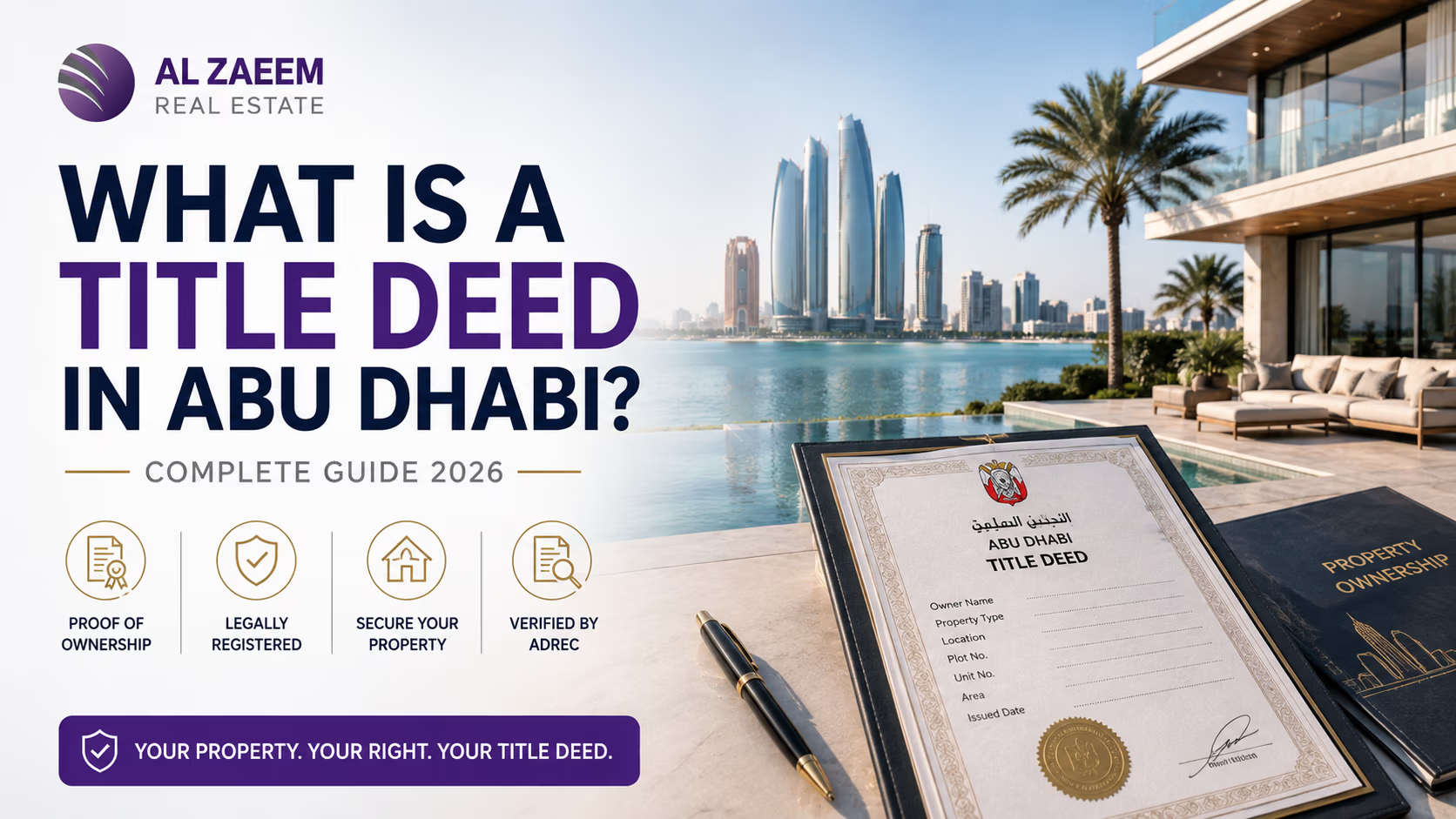
A title deed is one of the most important property ownership documents in Abu Dhabi.
ADREC defines a title deed as a certificate issued by the Real Estate Registration Department based on the property cadastre, identifying the property’s location, boundaries, area and related registered details. Abu Dhabi law also makes registration fundamental: ownership and other real-estate rights are not transferred against the parties or third parties unless the transfer is registered.
In simple terms:
SPA = agreement to buy.
Title deed = registered evidence of ownership.
That distinction becomes especially important when buying off-plan property.
Quick Answer
A title deed in Abu Dhabi is the official registered document evidencing ownership of a property or property right.
It matters when you:
- prove ownership;
- sell the property;
- mortgage it;
- transfer it;
- inherit it;
- gift it;
- deal with government or property-related services.
For newly completed development projects, ADREC’s current handover process states that developers complete snagging and issue title deeds for each unit after receiving the Certificate of Completion.
1. What Exactly Is a Title Deed?
A title deed is not simply a receipt showing that money was paid.
It is tied to the official real-estate registration system.
ADREC’s regulations define it as a certificate issued by the Real Estate Registration Department based on the property cadastre and describing the registered property.
This makes it fundamentally different from:
- reservation forms;
- booking forms;
- payment receipts;
- broker agreements;
- an SPA;
- developer statements.
Those documents may support a transaction.
The title deed records the registered ownership position.
2. Why Is a Title Deed So Important?
Because registered ownership has legal significance.
Abu Dhabi’s property-ownership legislation states that ownership of real estate and other real-estate rights are not transferred against the contracting parties or third parties unless the transfer is registered. Registration is treated as conclusive evidence of ownership and registered rights.
So when assessing a property, the question should not only be:
“Did someone buy it?”
It should also be:
“Who is the registered owner?”
3. Title Deed vs Sale and Purchase Agreement
These documents serve different purposes.
Sale and Purchase Agreement — SPA
The SPA records the contractual agreement between buyer and seller or buyer and developer.
It can include:
- purchase price;
- payment schedule;
- unit specifications;
- completion terms;
- obligations;
- default provisions;
- handover terms.
Title Deed
The title deed reflects the formally registered ownership position.
So:
SPA = contractual transaction
while:
Title deed = registered ownership evidence
They should not be treated as interchangeable.
4. Do Off-Plan Buyers Immediately Receive a Title Deed?
Generally, an off-plan buyer is purchasing a unit that is still under construction, so the transaction initially sits within Abu Dhabi’s off-plan / interim registration system rather than the completed-property title process. ADREC’s current developer journey separates registered off-plan SPA sales from project completion and final handover.
That is why an off-plan buyer may have contractual and registered rights before receiving the final title deed for the completed unit.
5. When Is the Title Deed Issued for an Off-Plan Property?
ADREC’s 2026 developer journey is clear about the sequence.
After the project receives its Certificate of Completion, the official handover process begins. That process includes:
- snagging;
- title deed issuance;
- appointment of an approved community manager;
- service-charge budget approval.
Therefore, title deed issuance sits around the transition from:
off-plan asset → completed registered property.
6. What Happens After You Have Fully Paid for the Unit?
Abu Dhabi’s development regulations provide that when the purchaser has fulfilled the contractual obligations and paid the full purchase price under the registered agreement, the developer must apply to transfer ownership of the real-estate unit from the interim register into the Real Estate Register, together with associated registered property rights.
This is one reason final payment and title transfer should be treated as related but distinct steps.
Paying the developer is not, by itself, the same thing as completing the property-registration process.
7. What Information Can a Title Deed Identify?
ADREC’s legal definition describes the title deed as specifying property information based on the cadastre, including matters such as:
- location;
- boundaries;
- area;
- registered property particulars.
The exact document format and fields can vary by property and registered right.
What matters is that it identifies the asset and links it to the official real-estate registration record.
8. Does a Title Deed Show the Owner?
Its fundamental purpose is to evidence the registered property ownership position.
That means ownership identity is central to its function within the registration system. Abu Dhabi law treats registration as the conclusive evidence of registered ownership and property rights.
This becomes critical when conducting due diligence before buying a resale property.
9. What Should a Buyer Check on a Title Deed?
Before proceeding with a resale purchase, confirm that the title documentation corresponds with:
- the seller;
- the property;
- unit number;
- location;
- size;
- registered rights;
- mortgage position where relevant.
Do not rely only on:
- listing screenshots;
- WhatsApp documents;
- sales brochures;
- verbal confirmation.
Your transaction should ultimately match the official registered property position.
10. Can a Title Deed Be Verified?
ADREC provides an official Verify Document service for certificates and other real-estate documents.
That makes document verification an important due-diligence step, particularly where a buyer receives copies electronically.
Do not assume a professional-looking PDF is automatically authentic.
11. Why Document Verification Matters
Property transactions can involve:
- overseas owners;
- remote buyers;
- representatives;
- mortgages;
- companies;
- multiple parties.
The more complex the transaction, the more important it becomes to validate official documents through the relevant government system rather than relying solely on copies supplied by another party.
ADREC’s digital platform explicitly provides certificate and document-verification services.
12. Title Deed vs Property Ownership Certificate
ADREC lists both:
- Title Deed issuance
- Property Ownership Certificate issuance
as separate certificate services.
Therefore, buyers should not casually use these terms as though every certificate is exactly the same document.
A title deed is tied to the registered property record, while other ownership certificates may serve related documentary or administrative purposes.
13. Title Deed vs Property Valuation Certificate
These are completely different.
Title Deed
Shows registered ownership/property information.
Valuation Certificate
Addresses property valuation.
ADREC lists title deeds and valuation certificates as separate certificate services.
A valuation does not prove ownership.
And a title deed does not tell you the current market value of the property.
14. Title Deed vs Site Plan
Again, separate documents.
ADREC lists site plans independently alongside title deeds, ownership certificates and valuation certificates.
A site plan is primarily about the physical/site representation.
The title deed is about registered ownership.
15. Do You Need a Title Deed to Sell Property?
A resale transaction depends on establishing the current registered ownership position before transferring ownership to the buyer.
Abu Dhabi registration law makes registration essential to transferring real-estate ownership and rights.
In practical terms, the seller must be able to demonstrate that they have the registered right they are attempting to sell.
16. What Happens to the Title When the Property Is Sold?
The ownership register is updated through the transfer process.
The buyer then becomes the registered owner once the transaction is formally completed and registered.
This is why the sale of property is more than:
buyer pays seller → keys change hands.
The legal ownership record must change too.
17. Is a Title Deed Needed for a Mortgage?
Mortgages are themselves registrable real-estate rights within Abu Dhabi’s formal registration system.
ADREC’s platform provides services for:
- mortgage registration;
- mortgage release;
- mortgage modification;
- related financing transactions.
Because the lender is securing financing against registered property rights, the registered ownership position matters.
18. Does a Mortgage Remove Your Ownership?
No.
A mortgage and ownership are different registered interests.
The owner remains the owner while the mortgage creates a secured interest in favor of the lender, subject to the financing and registration structure.
ADREC separately provides mortgage registration and release services within the property-registration framework.
19. What Happens When the Mortgage Is Paid Off?
The mortgage should be formally released from the property-registration record through the applicable process.
This matters because paying the bank balance and clearing the registered mortgage are related but distinct administrative/legal steps.
If you later sell a mortgaged property, read our guide:
What Happens to Your Mortgage If You Sell Property in Abu Dhabi?
20. Can More Than One Person Appear in the Ownership Record?
Joint ownership can exist.
Where two or more people acquire property together, the ownership structure should be properly documented and registered rather than treated as an informal agreement between the parties.
For the detailed implications, read our:
Abu Dhabi Joint Ownership Guide
21. Can a Company Hold the Title?
Depending on the applicable ownership eligibility and transaction structure, legal entities may hold qualifying real-estate interests.
The ownership record should correctly reflect the legal owner rather than an individual shareholder being casually treated as the owner of a company asset.
See:
Can a Company Buy Property in Abu Dhabi?
22. What Happens to the Title Deed When Property Is Inherited?
Abu Dhabi property law provides for real-estate ownership, usufruct or musataha rights to be registered in the names of heirs once valid inheritance documentation is submitted.
That means inheritance should eventually be reflected in the property-registration record.
Read our:
Abu Dhabi Property Inheritance Guide
23. What About Gifted Property?
A gift changes ownership.
Therefore, where a property is legally transferred from one person to another as a gift, the official ownership position must also be updated through the relevant registration process.
For the broader process and considerations, see:
Can You Gift Property in Abu Dhabi?
24. Can Someone Handle Title-Related Transactions for You?
Potentially, through legally valid representation.
ADREC provides an authorization service allowing a trusted legal representative to perform applicable real-estate transactions on another person’s behalf.
This can be particularly useful for overseas property owners.
Read:
Abu Dhabi Property Through Power of Attorney
25. Can You Own Abu Dhabi Property While Living Abroad?
Ownership and residence are not the same issue.
If you lawfully own qualifying Abu Dhabi property, moving abroad does not automatically mean the property disappears from your ownership.
What changes is how you manage:
- documentation;
- tenants;
- banking;
- maintenance;
- representation;
- eventual sale.
See our detailed:
Abu Dhabi Property After Leaving the UAE Guide
26. What Happens at Handover?
For a newly completed development, ADREC’s current handover framework includes:
Certificate of Completion → snagging → title deed issuance → community management → service-charge budget.
So buyers should not think of handover as only:
“The developer gives me the keys.”
It also includes important ownership and community formalities.
27. Keys Are Not the Same as a Title Deed
This distinction sounds obvious, but it matters.
Having:
- keys;
- access card;
- possession;
- furniture;
- payment receipts
does not replace formal ownership registration.
Abu Dhabi’s law gives registration the decisive role in proving registered ownership and real-estate rights.
28. Full Payment Is Not the Same as Registration
You may have paid the entire purchase price.
But formal ownership still needs to move into the correct real-estate register.
Abu Dhabi’s development regulations specifically require the developer to apply for transfer when the purchaser has fulfilled the registered contractual obligations and fully paid the price.
This is another reason buyers should follow the paperwork after final payment.
29. Why Title Deed Delays Matter
If handover is complete but title issuance or registration remains unresolved, you should investigate rather than assume everything is finished.
Potentially affected future transactions can include:
- resale;
- mortgage;
- inheritance;
- ownership verification;
- administrative services.
For delayed developments generally, see:
What Happens If an Off-Plan Project Is Delayed in Abu Dhabi?
30. What Should Off-Plan Buyers Ask at Handover?
Ask:
- Has the Certificate of Completion been issued?
- Is snagging complete?
- What is the title-deed issuance process?
- Is anything outstanding from the buyer?
- Are all required payments cleared?
- Has ownership moved from the interim register?
- When will the final ownership record be available?
ADREC places title deed issuance directly within the official handover stage for completed developments.
31. How Does a Title Deed Help When Renting?
A landlord needs a clear legal ownership position when leasing property.
Abu Dhabi has a formal lease-registration system administered within ADREC’s digital property ecosystem.
For completed off-plan property, the broader sequence is therefore:
completion → title/ownership → rental preparation → tenancy registration.
See:
Can You Rent Out an Off-Plan Property in Abu Dhabi?
32. What Should You Check Before Buying a Resale Property?
Do not only inspect the walls.
Check:
- seller identity;
- registered ownership;
- property details;
- mortgage status;
- title documentation;
- outstanding obligations;
- physical condition.
Then use our:
Abu Dhabi Property Inspection Checklist
for the physical side of due diligence.
33. What If the Seller’s Name Does Not Match?
Do not proceed casually.
There may be a legitimate explanation, such as:
- POA;
- corporate ownership;
- inheritance;
- authorized representative.
But the legal authority to sell must be established.
A person showing you the property is not necessarily the registered owner.
34. What If the Property Is Owned by a Company?
Then the company’s authority to sell and the authority of its signatories also matter.
You may need to review:
- company records;
- authorized signatory;
- ownership documentation;
- transaction authorization.
The title/registration record should align with the legal seller.
35. What If the Owner Has Died?
Then you cannot simply treat a relative as the new owner because the family agrees internally.
Abu Dhabi’s property law provides for the real-estate right to be registered in the heirs’ names after the required inheritance documentation is submitted.
Formal succession matters.
36. Can You Lose a Title Deed?
The exact current process for replacement or reissuance should be handled through ADREC’s certificate and property-registration services.
Because ADREC’s current platform supports issuance of title deeds and other ownership certificates, owners should use the official service channel rather than relying on unofficial replacement documents.
37. Digital Title Deeds and Online Services
Abu Dhabi has moved much of its real-estate administration into ADREC’s digital platform.
Its current services include:
- title deeds;
- ownership certificates;
- document verification;
- valuation certificates;
- mortgages;
- transactions;
- authorization.
This makes digital document management increasingly central to property ownership.
38. Keep Your Property Documents Organized
Maintain a secure record of:
- title deed;
- SPA;
- mortgage documents;
- handover documents;
- snagging reports;
- service-charge statements;
- tenancy documents;
- POA where applicable.
Do not store your entire ownership history in one WhatsApp conversation.
39. Title Deed Due-Diligence Checklist
Before relying on a title deed:
- Verify seller identity
- Confirm property identity
- Check unit number
- Check location
- Review registered owner
- Review property area/details
- Check mortgage position
- Confirm any ownership shares
- Verify company ownership if applicable
- Verify POA if representative is acting
- Check inheritance documentation if relevant
- Compare details with SPA
- Compare details with property being inspected
- Verify official documentation through ADREC where available
- Resolve discrepancies before payment or transfer
40. Common Title Deed Mistakes
Thinking the SPA Is the Title Deed
It is not.
Thinking Full Payment Automatically Completes Registration
It does not necessarily complete every registration step.
Accepting a Screenshot Without Verification
Verify important ownership documents.
Ignoring a Mortgage
Mortgage rights form part of the registered property position.
Buying From the Wrong Person
Confirm the registered owner and authority to sell.
Ignoring Joint Ownership
Every registered ownership interest matters.
Forgetting Succession
Inherited property must be properly transferred into the heirs’ registered ownership.
Frequently Asked Questions
What is a title deed in Abu Dhabi?
It is an official certificate issued by the Real Estate Registration Department based on the property cadastre and identifying the registered property.
Does a title deed prove ownership?
Registration is treated under Abu Dhabi law as conclusive evidence of registered ownership and property rights.
Is an SPA the same as a title deed?
No. An SPA is the sale contract; the title deed reflects registered ownership.
When does an off-plan buyer receive the title deed?
ADREC’s current handover process places title deed issuance after the project obtains its Certificate of Completion and enters formal handover.
Can I verify a property certificate?
ADREC provides an official certificate/document verification service.
Does ADREC issue title deeds online?
ADREC currently lists title deed issuance among its digital certificate services.
What happens if I inherit the property?
The registered right can be transferred into the heirs’ names once the required inheritance documentation is submitted.
Can a representative handle property matters for me?
ADREC provides authorization services for trusted legal representatives to perform applicable transactions.
A Title Deed Is More Than a Piece of Paper
When buying property, it is easy to focus on:
price, view, bedrooms, payment plan and handover date.
But one of the most important questions is:
How will my ownership be formally registered?
The title deed is central to that answer.
Abu Dhabi’s registration framework gives registered ownership legal significance, while ADREC’s current platform provides title deed issuance, ownership certificates and document-verification services.
So the ownership journey is not complete merely because you:
paid → received keys → moved in.
The proper sequence is closer to:
buy → register → complete → handover → title → manage the asset.
For what comes next after ownership, read our Complete Abu Dhabi Property Owner Guide.
Buying Property in Abu Dhabi?
Al Zaeem Real Estate can help buyers understand the practical property journey from selection and off-plan purchase through handover and long-term ownership.
Explore Abu Dhabi properties, apartments, villas, townhouses and off-plan properties.
Last reviewed: August 2026.
This guide provides general information only and does not constitute legal advice. Registration requirements and document procedures can depend on the property and transaction. Verify current requirements through ADREC before relying on any property document.