



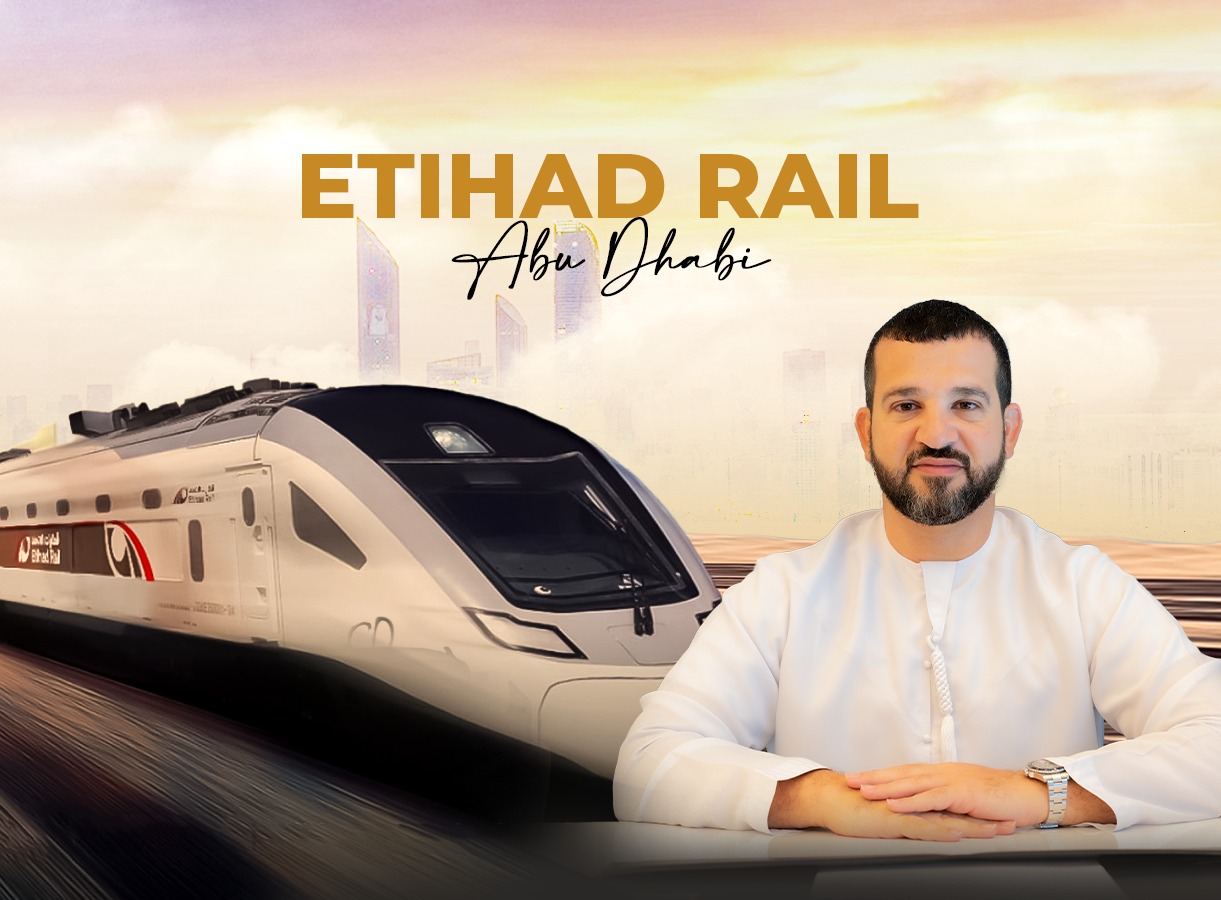
An Insight by Ahmed Loubani-The introduction of the Etihad Rail project is more than infrastructure — it’s a paradigm shift in how people perceive distance, investment, and opportunity across the UAE. In the words of Ahmed Loubani, CEO of Al Zaeem Real Estate, this initiative doesn’t just shorten commute times — it transforms the foundational “mental map” of property value in the Emirates.
From his vantage point at Al Zaeem Real Estate, Mr. Loubani sees this project as a catalyst that will ripple across markets, reshape investment patterns, and redefine neighborhoods. What was once “too far” becomes viable. What was once secondary could become premium. And Al Zaeem intends to be part of that evolution.
Changing the Real Estate Landscape
As Ahmed Loubani explains, Al Zaeem Real Estate is watching closely how the rail line influences buyer behavior. Areas along the route are seeing increased attention not merely because of affordability, but because they’re now connected. The zones once dismissed as remote are being reconsidered, and that shift will drive the next wave of property growth.
In similar global city rail developments, prices within walking distance to stations often command a 10–15% premium once connectivity is fully established. But Mr. Loubani argues the true gains are in velocity — faster sales absorption, tighter turnaround times, and improved liquidity. In his view, Al Zaeem Real Estate will leverage early entry in these zones to capture the value before it becomes mainstream.
Strategic Focus: Nodes over Lines
One key insight from Ahmed Loubani is that investors should focus less on mere proximity and more on nodes — the station catchment areas where urban integration happens. He emphasizes that Al Zaeem Real Estate will target properties within 500–800 meters of station hubs, especially where mixed-use development — retail, offices, amenities — is planned.
Loubani references cities like Hong Kong, Tokyo, and Dubai Metro stations, where the uplift effect is concentrated near transit hubs. His strategic positioning for Al Zaeem Real Estate is to invest early in these nodes, not the entire track.
Investor Psychology & Early Signals
Long before official price reports surface, Ahmed Loubani has already spotted market signals: landowners holding back from selling, developers exploring transit-oriented development (TOD) plans, and inquiries from buyer segments previously not interested in rail-adjacent zones.
He says for Al Zaeem Real Estate, this opens a window of opportunity to map and act before hype inflates prices. Those who wait until ribbon-cutting may find much of the upside already captured.
ntegration Is Everything
While rail itself is a game-changer, Ahmed Loubani warns that uplift can be muted if stations are isolated. If there’s no walkability, retail, public space, and connectivity to neighborhoods, the value remains latent. That’s why Al Zaeem Real Estate will advocate for holistic development — integrating amenities around stations, not just building tracks.
Applying the Vision in Practice
Al Zaeem Real Estate under MR.Ahmed Loubani is already aligning its roadmap to this transformation:
- Identifying target nodes near proposed stations
- Crafting development proposals that blend living, working, and leisure
- Engaging with planning authorities to ensure connected infrastructure
- Positioning marketing and investor pitches with rail proximity as a premium feature
For Mr. Loubani, the objective is clear: be among the first mobile bridges between connectivity and property demand.
Risks & Long-Term Resilience
Even as Ahmed Loubani positions Al Zaeem Real Estate for growth, he remains mindful of risk. He advises that rail-linked areas tend to hold up better during downturns, as access becomes a defensive attribute. While speculative jumps may slow, connectivity continually adds defense against vacancy and depreciation.
Final Words
The Etihad Rail project offers more than transit — it offers a new geography of value. Ahmed Loubani and Al Zaeem Real Estate are stepping in not as followers, but as architects of this new map. As neighborhoods, investment behavior, and growth patterns shift, their leadership and foresight may well define who wins in the next decade.
Ahmed Loubani, CEO of Al Zaeem Real Estate