


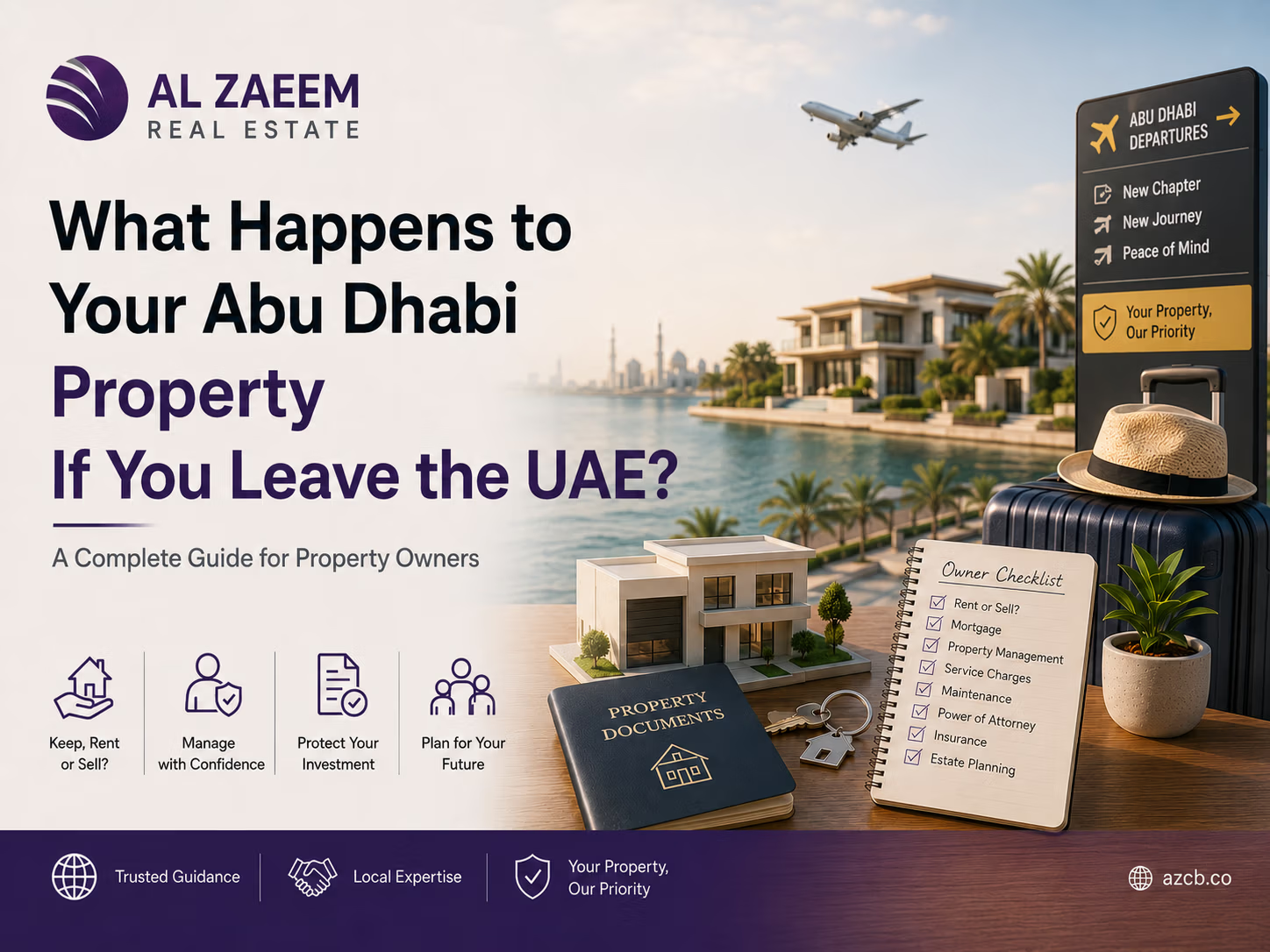
Leaving the UAE does not automatically mean you need to sell your Abu Dhabi property.
If you own real estate in Abu Dhabi and move abroad, your property can potentially remain:
- your long-term investment;
- a rental property;
- a second home;
- an appreciating asset;
- a future residence; or
- an asset you later sell, gift or pass to your heirs.
What changes is not necessarily your ownership.
What changes is how the property needs to be managed.
Abu Dhabi’s current real-estate system supports registered ownership, tenancy administration, mortgage services, property certificates and authorization of legal representatives. ADREC specifically provides an authorization service through which an owner can authorize a trusted legal representative to perform real-estate transactions on their behalf.
So the real question is not:
“Can I keep my Abu Dhabi property after leaving the UAE?”
The more useful question is:
“How do I manage, rent, finance and protect my Abu Dhabi property once I live overseas?”
This 2026 guide explains exactly that.
Quick Answer: What Happens to Your Property If You Leave the UAE?
Your Abu Dhabi property does not normally disappear or automatically need to be sold simply because you relocate outside the UAE.
Instead, you should make arrangements for:
ownership records → mortgage payments → property management → tenancy → service charges → maintenance → authorized representation → banking → insurance → estate planning → eventual resale.
ADREC’s current ecosystem supports tenancy contracts, title and ownership certificates, mortgage registration and release, owner-association services and authorized representation, making remote property administration much more practical than in the past.
If you already own property, keep our Complete Abu Dhabi Property Owner Guide alongside this article.
1. Does Leaving the UAE Cancel Your Property Ownership?
No.
Ownership of Abu Dhabi real estate is established through the applicable real-estate registration framework. ADREC’s property-ownership rules state that ownership and other real rights are established through registration.
Your immigration or residence status and your registered property ownership are therefore separate legal issues.
If you move:
- to Europe;
- to North America;
- to Asia;
- elsewhere in the GCC;
- or back to your home country,
your registered property does not simply become invalid because you no longer reside in the UAE.
However, your ability to manage the property efficiently may change once you are overseas.
2. Should You Sell Before Leaving the UAE?
Not necessarily.
There are at least four options.
Option 1 — Keep It as an Investment
You retain the property and potentially benefit from:
- rental income;
- future capital appreciation;
- portfolio diversification; and
- future use.
Option 2 — Rent It Out
The property becomes an income-producing asset while you live overseas.
Option 3 — Keep It Vacant
You retain it for:
- periodic visits;
- future relocation;
- family use; or
- long-term appreciation.
Option 4 — Sell It
You release your equity and move the capital elsewhere.
There is no universal correct choice.
The decision should depend on:
current market value + mortgage balance + rental potential + ownership costs + future appreciation + your need for liquidity.
3. Calculate Your Equity Before Deciding
Before leaving the UAE, determine how much equity you actually have in the property.
A simple starting point is:
Current Market Value – Outstanding Mortgage = Gross Equity
Suppose:
Property value: AED 2,400,000
Outstanding mortgage: AED 900,000
Approximate gross equity:
AED 1,500,000
Then account for:
- potential selling costs;
- mortgage settlement;
- service charges;
- brokerage;
- maintenance; and
- other applicable transaction costs.
If you are considering a sale, read our guide to selling a mortgaged property in Abu Dhabi.
4. Determine the Property’s Real Rental Potential
If your property can generate strong rent, keeping it may make more sense than selling.
Ask:
- What rent could it realistically achieve today?
- How long does a comparable unit take to lease?
- What tenant profile is likely?
- Furnished or unfurnished?
- What are annual service charges?
- What maintenance should I expect?
- What management fee will apply?
- What is the expected vacancy period?
Abu Dhabi maintains a formal tenancy-registration framework through ADREC, and its services include registering, renewing, modifying and terminating tenancy contracts.
You can compare current Abu Dhabi rental properties before deciding whether your property should become a rental investment.
5. Gross Rent Is Not Your Real Return
Suppose your apartment generates:
Annual rent: AED 120,000
That is not automatically AED 120,000 of profit.
Potential ownership costs might include:
- service charges;
- property management;
- routine maintenance;
- major repairs;
- mortgage payments;
- vacancy;
- leasing costs; and
- insurance where applicable.
A better calculation is:
Rental Income – Ownership Expenses = Net Property Income
For an overseas owner, this number matters far more than the advertised annual rent.
6. Should You Appoint a Property Manager?
For many overseas owners, yes.
A property manager can become the operational link between you and the property.
Depending on the service agreement, management may cover:
- tenant inquiries;
- property marketing;
- viewings;
- lease administration;
- rent coordination;
- maintenance;
- inspections;
- contractor access;
- tenant renewals;
- move-in and move-out;
- emergency issues; and
- owner reporting.
The objective is to ensure your property does not require you to fly to Abu Dhabi every time:
a tap leaks,
an AC stops working,
a tenant moves out,
or access is needed.
7. Property Management Is Different From Brokerage
A broker may help you find a tenant.
A property manager may continue managing the property after the tenant moves in.
These are different responsibilities.
When appointing someone, ask:
- Are you licensed for the activity?
- What services are included?
- Who handles emergencies?
- Who approves repairs?
- What is the spending limit without owner approval?
- Who collects rent?
- How often will I receive statements?
- How are inspections documented?
ADREC maintains directories of licensed real-estate providers and professionals, which can help owners verify parties operating in Abu Dhabi’s regulated real-estate sector.
8. Can Someone Manage Your Property on Your Behalf?
Yes, subject to the scope of authority granted.
ADREC’s current services expressly include authorization of a trusted legal representative to perform transactions on behalf of the owner.
This becomes particularly valuable once you live outside the UAE.
If you need someone to act formally for you, read our dedicated guide:
Buying and Managing Abu Dhabi Property Through Power of Attorney
9. Be Careful With Power of Attorney
A Power of Attorney can solve many remote-management problems.
It can also give someone significant authority.
Before granting one, understand whether it permits the representative to:
- lease property;
- sign tenancy documents;
- receive keys;
- deal with developers;
- communicate with banks;
- sell;
- mortgage;
- receive funds;
- sign transfer documents; or
- perform other transactions.
Do not grant broader authority than necessary simply for convenience.
A transaction-specific or limited authorization may be more appropriate in some circumstances.
Obtain professional advice where the authority is substantial.
10. Keep Your UAE Contact Information Updated
Leaving the UAE often means changing:
- mobile number;
- home address;
- residency documents;
- email;
- banking information; and
- identity documents over time.
Make sure important parties can still reach you.
That may include:
- developer;
- community manager;
- bank;
- property manager;
- tenant;
- broker; and
- relevant real-estate authority.
A property can become difficult to manage if important notices continue going to an inactive phone number or abandoned email account.
11. What Happens to Your Mortgage If You Leave?
Leaving the UAE does not make the mortgage disappear.
If the property is financed, you remain responsible for your lender obligations according to your financing agreement.
Before relocating, confirm:
- monthly repayment mechanism;
- direct debit;
- UAE account requirements;
- international transfer arrangements;
- lender contact details;
- insurance requirements;
- early settlement;
- refinancing implications; and
- what happens if your residency status changes.
ADREC’s real-estate services include formal mortgage registration, modification and release services.
For the sale scenario, use our Abu Dhabi mortgage sale guide.
12. Do Not Close Your UAE Bank Account Too Quickly
Some owners leave the UAE and immediately begin closing every local account.
That can create unnecessary problems if the property still depends on UAE banking arrangements.
A local account may remain useful for:
- mortgage repayments;
- rent;
- service charges;
- maintenance;
- utility payments;
- property-management fees;
- sale proceeds; and
- other property expenses.
Before closing an account, establish what your property will need after your relocation.
Also confirm the bank’s eligibility requirements for maintaining the account after residency changes.
13. What If Your Property Is Already Rented?
Leaving the UAE does not necessarily change the underlying tenancy relationship by itself.
Your responsibilities as landlord continue.
Abu Dhabi’s tenancy framework regulates registered lease contracts, and ADREC provides lease-contract registration and management services.
Before leaving, make sure:
- the tenancy is properly documented;
- tenant contact details are current;
- rent payment procedures are clear;
- maintenance contacts are established;
- emergency procedures exist;
- renewal responsibilities are assigned; and
- someone can access the property legally if required.
14. What If the Tenant Needs an Emergency Repair?
This is where remote ownership can fail if there is no system.
Imagine you are living in London and your tenant reports:
AC failure in August.
You cannot wait until your next UAE trip.
You need:
- a local contact;
- contractor access;
- approval procedures;
- repair-budget authority;
- documentation; and
- payment mechanism.
For overseas owners, maintenance should be designed as a process, not handled reactively.
15. Create a Repair Authorization Policy
Give your property manager clear rules.
For example:
Repairs under AED X: manager may approve.
Repairs above AED X: owner approval required.
Emergency health/safety issue: manager may act immediately within agreed limits.
The actual limits depend on your property and preferences.
The purpose is to prevent two extremes:
nothing gets repaired without waiting for you, or
someone spends unlimited money without your approval.
16. Keep a Maintenance Reserve
Rental income should not all be treated as disposable cash.
Set aside money for:
- AC repairs;
- plumbing;
- electrical work;
- appliances;
- repainting;
- wear and tear;
- deep cleaning;
- vacancy;
- unexpected building-related expenses.
For villas, reserve requirements can be larger because you may also need to maintain:
- garden;
- pool;
- irrigation;
- exterior areas;
- roof;
- gates; and
- mechanical systems.
If you’re comparing property formats, browse current villas for sale, apartments and townhouses.
17. Continue Paying Service Charges
Leaving the UAE does not eliminate community-related ownership expenses.
ADREC’s current owner-association services cover jointly owned-property matters including:
- budgets;
- invoices;
- service charges; and
- community administration.
An overseas owner should know:
- amount due;
- billing schedule;
- payment method;
- contact point;
- whether invoices are electronic; and
- whether there are outstanding balances.
Ignoring service-charge notices because you are overseas can create unnecessary problems.
18. What If You Leave the Property Empty?
Some owners do not want tenants.
That can be reasonable if the property is:
- a second home;
- used seasonally;
- awaiting future occupation;
- being held for appreciation; or
- intended for family.
But vacant property still needs management.
You should arrange periodic checks for:
- AC;
- leaks;
- humidity;
- drainage;
- electricity;
- plumbing;
- pests;
- balcony condition;
- doors and windows;
- security; and
- general deterioration.
An empty property is not a maintenance-free property.
19. Should You Leave the AC Running?
The appropriate AC strategy depends on:
- property type;
- cooling system;
- humidity;
- season;
- building;
- utility arrangement; and
- how long the unit will remain vacant.
Turning every system off for a long period may create different risks from maintaining controlled cooling.
For long-term vacancy, obtain property-specific advice from the building/community manager or appropriate maintenance provider rather than using a generic setting.
20. Arrange Regular Inspections
An overseas property should still be inspected.
For example:
- after tenant move-out;
- before a new tenancy;
- after major repairs;
- periodically during long vacancies;
- before sale; and
- whenever water or structural concerns arise.
For a detailed physical review, use our 30-Point Abu Dhabi Property Inspection Checklist.
21. What If Your Off-Plan Property Is Not Ready Yet?
You may leave the UAE before your off-plan investment reaches handover.
That does not mean you lose the investment.
Continue monitoring:
- payment schedule;
- project status;
- construction;
- developer communications;
- expected completion;
- snagging;
- final payment; and
- handover.
ADREC currently provides project-registration and completion-tracking services as part of its real-estate ecosystem.
For current opportunities, browse Abu Dhabi off-plan properties.
22. What If the Off-Plan Project Is Delayed After You Leave?
Remote location makes documentation even more important.
Keep:
- SPA;
- receipts;
- project updates;
- developer notices;
- revised completion notices; and
- all material correspondence.
If handover is delayed, use our:
Abu Dhabi Off-Plan Property Delay Guide
Do not stop payments or attempt cancellation purely because you are no longer in the UAE.
Your contractual position should be assessed separately from your residency status.
23. How Do You Handle Handover From Overseas?
You may not necessarily need to return simply to collect the keys.
Depending on the development and transaction, you may be able to arrange:
- Power of Attorney;
- authorized representation;
- professional snagging;
- remote inspection reporting;
- key collection;
- property-management onboarding; and
- leasing preparation.
Before completion, use our Abu Dhabi Property Handover Guide.
24. Do Not Skip Snagging Because You Live Overseas
Being 5,000 kilometers away is not a reason to accept the property unseen.
Arrange someone competent to inspect:
- walls;
- flooring;
- doors;
- windows;
- AC;
- plumbing;
- electrical systems;
- kitchen;
- bathrooms;
- balcony;
- parking;
- storage; and
- visible defects.
Ask for:
written report + clear photographs + video + reinspection.
Remote owners need better evidence, not less.
25. What If You Want to Sell After Leaving?
You may be able to sell your property while living overseas, provided the required transaction and representation procedures are followed.
ADREC provides transaction-management and authorized-representation services within its current real-estate system.
Before selling:
- determine market value;
- check mortgage balance;
- check tenant status;
- clear relevant property obligations;
- organize ownership documents;
- establish authority to sign;
- appoint licensed professionals; and
- verify payment arrangements.
Do not wait until a buyer is found before organizing your documentation.
26. What If the Property Is Mortgaged When You Sell?
The mortgage must be incorporated into the sale process.
Use our dedicated guide:
What Happens to Your Mortgage If You Sell Property in Abu Dhabi?
The seller should establish:
- settlement figure;
- mortgage release;
- current property value;
- equity;
- buyer financing status; and
- expected net proceeds.
Living overseas adds coordination but does not necessarily prevent the transaction.
27. What If You Want to Keep the Property for Years?
Then think like a long-term asset owner.
Every year, review:
Value
What is the property worth now?
Rent
What could it realistically earn?
Net Yield
What remains after all costs?
Mortgage
What balance remains?
Maintenance
Is significant capital expenditure approaching?
Community
Is the area becoming stronger or weaker?
Alternative Investment
Could your equity work harder somewhere else?
ADREC provides official real-estate market data and analytics intended to improve transparency around Abu Dhabi property performance.
28. Location Matters Even More for Remote Ownership
A property that is easy to manage and lease can suit an overseas owner better than a complicated asset.
Established and developing investment locations include:
The best property for a resident owner may not always be the best property for a landlord living overseas.
29. Apartments Can Be Easier to Manage Remotely
Apartments may offer advantages such as:
- common-area management;
- centralized building systems;
- security;
- established maintenance infrastructure; and
- easier tenant turnover.
But they also involve:
- service charges;
- common-property rules;
- building management;
- neighboring units; and
- dependence on community maintenance.
Explore apartments for sale in Abu Dhabi.
30. Villas May Require More Active Management
A villa may offer:
- larger living space;
- family demand;
- privacy;
- garden;
- pool; and
- premium positioning.
But an overseas villa owner may also need to manage:
- landscaping;
- irrigation;
- pool systems;
- exterior maintenance;
- roofs;
- drainage;
- gates;
- pest control; and
- larger repairs.
Explore villas for sale.
The question is not which property type is universally better.
It is:
Which one fits your management capacity and investment objective?
31. Protect Your Property Documents
Maintain secure digital and physical copies of:
- title deed or ownership documentation;
- SPA;
- mortgage agreement;
- service-charge records;
- tenancy contracts;
- property-management agreement;
- Power of Attorney;
- inspection reports;
- insurance documents;
- payment records; and
- identity documents used in the transaction.
ADREC also provides a document-verification service for specified real-estate documents such as tenancy contracts and certificates.
32. Keep Your Passport Information Current
Over a long ownership period, passports expire.
Names or identity documents may also change.
If the identity data linked with your property transactions becomes outdated, establish whether any relevant authority, bank, developer or property manager needs updated documentation.
Do this before you urgently need to sell or execute another transaction.
33. Think About Estate Planning Before You Leave
This is one of the most important long-term ownership considerations.
Ask:
If something happens to me while I live overseas, what happens to my Abu Dhabi property?
Do not leave this question unanswered.
Abu Dhabi Judicial Department provides specific civil-will and inheritance processes for qualifying non-Muslims, including the ability to register a will stating how the expatriate wants assets distributed.
For Muslim estates, ADJD separately provides succession procedures based on Islamic Sharia.
We will cover this separately in:
Can You Inherit Property in Abu Dhabi? What Property Owners Should Know
34. Do You Need a UAE Will?
This is a legal-planning question rather than an ordinary property-management question.
The answer depends on factors including:
- religion;
- nationality;
- family;
- asset structure;
- existing wills;
- ownership structure; and
- applicable succession rules.
For qualifying non-Muslims, ADJD provides a formal civil-will registration mechanism, including a process that may be handled through representative authority and video-conference probate procedures.
Property owners should obtain appropriate estate-planning advice rather than assuming their home-country will automatically handles every UAE asset exactly as expected.
35. What If You Die While Living Overseas?
The property becomes part of the relevant estate process.
It does not simply vanish, and family members should not assume they can privately transfer the property between themselves without formal procedures.
Registered real-estate rights are dealt with through the applicable succession and property-registration framework.
Proper estate planning can reduce uncertainty for heirs.
36. Can You Gift the Property Before Leaving?
Potentially, subject to the applicable ownership-transfer procedures and circumstances.
But gifting should not be used casually as a shortcut around estate planning.
Issues may include:
- ownership eligibility;
- family relationship;
- mortgage;
- valuation;
- registration;
- fees;
- legal implications; and
- future control of the asset.
This deserves its own dedicated guide:
Can You Gift Property to Someone in Abu Dhabi? 2026 Guide
37. Review Your Insurance Position
Before relocating, check what protection applies to your property.
Depending on the property, this could include:
- building-related coverage;
- contents;
- landlord risks;
- liability;
- vacant-property implications; and
- lender-required insurance.
Do not assume your insurance remains identical once:
- the property becomes rented;
- it becomes vacant; or
- you stop living there.
Confirm directly with the relevant insurer or adviser.
38. Be Careful With International Tax Assumptions
Your UAE property may have implications outside the UAE.
For example, your new country of residence may have rules concerning:
- overseas rental income;
- capital gains;
- foreign assets;
- reporting;
- inheritance;
- wealth taxation; or
- tax residency.
These depend entirely on the jurisdiction.
Do not assume that because an asset is located in Abu Dhabi, it has no tax consequences in the country where you now live.
Obtain jurisdiction-specific tax advice.
39. Watch Currency Exposure
Suppose your Abu Dhabi property produces rent in AED but you live in:
- the UK;
- Europe;
- Canada;
- Australia; or
- another country.
Your investment return in your home currency can change because of exchange rates.
This affects:
- rental income;
- mortgage servicing;
- sale proceeds; and
- portfolio performance.
An overseas investor should measure both:
AED return and home-currency return.
40. Maintain an Annual Owner Review
Once a year, create a simple property review.
Record:
Current Market Value
Outstanding Mortgage
Annual Rent
Net Income
Service Charges
Maintenance Costs
Vacancy
Property Manager Performance
Tenant Status
Upcoming Repairs
Estate Documentation
Sell/Hold Decision
This turns remote ownership into portfolio management instead of passive neglect.
Should You Keep, Rent or Sell Before Leaving?
Use this framework.
Keep and Rent If:
- rental yield is attractive;
- property demand is strong;
- you have reliable management;
- mortgage is manageable;
- long-term outlook remains positive.
Keep Vacant If:
- you expect to return;
- you want a second home;
- financial carrying costs are acceptable;
- personal use matters more than rental return.
Consider Selling If:
- you need capital;
- property is underperforming;
- mortgage costs are high;
- remote management is impractical;
- another investment is stronger;
- you have achieved your target return.
Do not sell simply because you are leaving.
Do not hold simply because you already own.
Make the property justify its position in your portfolio.
Overseas Abu Dhabi Property Owner Checklist
Before leaving the UAE:
- Confirm ownership documents
- Store digital copies
- Update contact details
- Review mortgage
- Confirm payment mechanism
- Review UAE bank arrangements
- Establish market value
- Establish rental value
- Decide rent / hold / sell
- Appoint property manager if required
- Verify professional licensing
- Establish repair procedures
- Create maintenance reserve
- Check service charges
- Review tenancy documents
- Establish emergency contact
- Arrange inspections
- Update insurance
- Review utility arrangements
- Consider Power of Attorney
- Limit authority appropriately
- Keep developer contacts
- Keep community-manager contacts
- Monitor off-plan projects
- Arrange remote handover if needed
- Review mortgage-sale options
- Review estate planning
- Review tax position in destination country
- Monitor currency exposure
- Review the asset annually
Common Mistakes Owners Make When Leaving the UAE
Selling Automatically
Relocation does not necessarily mean sale is financially best.
Keeping the Property Without a Plan
An unmanaged overseas property can deteriorate quickly.
Closing the UAE Bank Account Too Soon
Property obligations may still depend on local banking.
Forgetting Mortgage Obligations
Relocation does not cancel the loan.
Leaving No Local Representative
Someone may eventually need lawful access or authority.
Using an Overly Broad POA
Grant only the authority required.
Ignoring Service Charges
They continue even if you live abroad.
Leaving a Property Vacant Without Inspection
Empty does not mean maintenance-free.
Ignoring Estate Planning
An overseas property is a major estate asset.
Never Reviewing Investment Performance
Past purchase decisions should not determine future portfolio decisions.
Frequently Asked Questions
Can I keep my Abu Dhabi property after leaving the UAE?
Generally, leaving the UAE does not itself cancel registered property ownership. Property rights are based on the applicable ownership and registration framework.
Do I have to sell my property if my UAE residence visa ends?
Do not assume so. Property ownership and immigration status are separate matters. Your specific ownership right and any visa implications should be reviewed separately.
Can I rent my property while living overseas?
Yes, subject to the property’s legal and contractual position and Abu Dhabi’s tenancy procedures. ADREC provides formal lease-registration and management services.
Can someone manage my property for me?
Yes. Professional management can handle day-to-day operations, while ADREC also provides authorization mechanisms for legal representatives to perform applicable transactions.
Can I sell my Abu Dhabi property from overseas?
Potentially yes, provided the required transaction, identity, documentation and representation procedures are completed correctly.
What happens to my mortgage if I leave the UAE?
The financing remains subject to your lender agreement. Before leaving, confirm payment, banking and residency-related requirements directly with your lender.
What if my property is still off-plan?
Continue meeting applicable contractual obligations, monitor construction and arrange remote snagging and handover when completion approaches. ADREC maintains project-registration and tracking services.
Should I appoint someone under Power of Attorney?
It can be useful if transactions need to be completed while you are overseas, but authority should be carefully drafted. See our Abu Dhabi property Power of Attorney guide.
What happens to the property if I die overseas?
The property becomes subject to the applicable estate and succession process. ADJD provides separate inheritance and will mechanisms, including civil-will procedures for qualifying non-Muslims.
Leaving the UAE Does Not Mean Leaving Your Investment Behind
Your physical location and your property investment do not have to be the same.
An Abu Dhabi property can continue functioning as:
a home,
a rental asset,
a long-term investment,
a family asset,
or part of an international property portfolio
while you live elsewhere.
The key is structure.
The strongest overseas owners have systems for:
management,
rent,
maintenance,
mortgage payments,
representation,
documentation,
estate planning,
and eventual exit.
ADREC’s current digital ecosystem now encompasses tenancy, transactions, certificates, mortgages, owner-association administration, project tracking and authorized representation, making many aspects of property administration possible without constant physical presence.
So before leaving Abu Dhabi, do not simply ask:
“Should I sell?”
Ask:
“What role should this property play in my wealth after I leave?”
That is the better ownership decision.
Own Property in Abu Dhabi but Moving Overseas?
Al Zaeem Real Estate can help owners evaluate whether to hold, rent or sell their Abu Dhabi property based on current market positioning and their long-term objectives.
Explore Abu Dhabi real estate, properties for sale, rental properties, apartments and villas.
Last reviewed: August 2026.
This guide provides general information only and does not constitute legal, immigration, banking, tax, estate-planning or investment advice. Individual requirements depend on ownership structure, financing, residency, nationality and personal circumstances.