


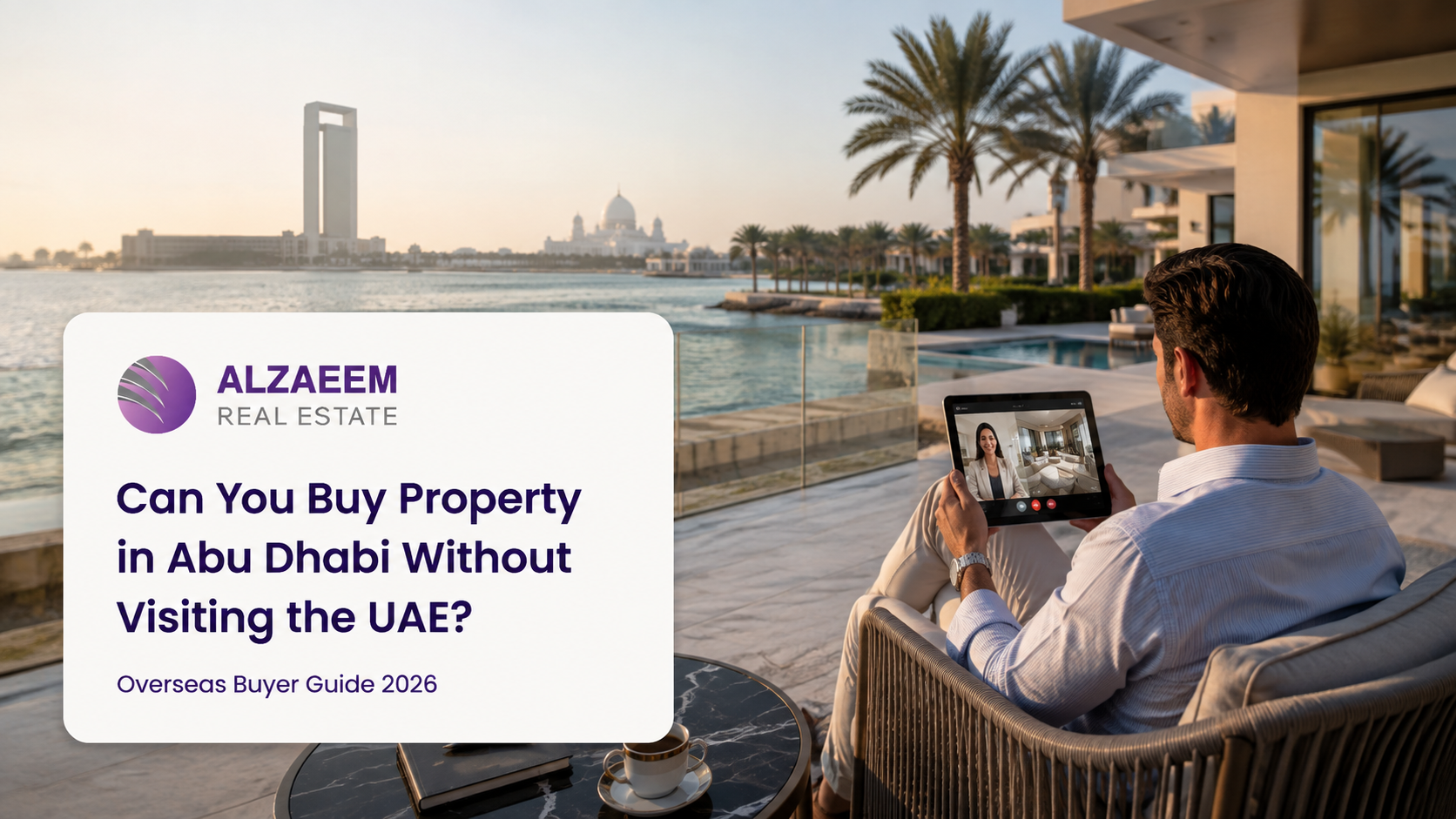
Yes. In Abu Dhabi, a properly authorized representative can act on your behalf in certain real-estate transactions, provided the authority is valid, appropriately documented, and accepted for the specific transaction.
ADREC currently provides an official Power of Attorney / Authorization service that allows a trusted legal representative to perform transactions on another person’s behalf. Abu Dhabi’s property-ownership framework also states that a proxy must provide a duly authenticated and legalized power of attorney showing the authority granted by the principal.
This can be particularly useful if you:
- live outside the UAE;
- cannot travel to Abu Dhabi;
- are buying as an overseas investor;
- need someone to attend transaction appointments;
- require assistance with handover;
- own multiple properties; or
- want a trusted person or lawyer to handle defined steps.
But a Power of Attorney should never be treated casually.
The key question is not simply:
“Can someone buy property for me?”
It is:
“What exact authority am I giving them, and is that authority sufficient for the transaction?”
If you are buying from abroad, first read our guide to buying Abu Dhabi property without visiting the UAE.
Quick Answer
Someone may be able to buy or complete parts of an Abu Dhabi property transaction on your behalf if they have a valid Power of Attorney or other accepted legal authority covering the required acts.
The safe sequence is:
Choose the property → decide what the representative needs authority to do → prepare the correct POA → authenticate/attest it as required → complete KYC → verify the representative → complete the transaction through official channels → retain all records.
ADREC’s July 2026 KYC policy expressly lists Power of Attorney / Acting Authority as required where a person acts on behalf of an investor, with notarisation or attestation required where applicable.
1. What Is a Power of Attorney in a Property Transaction?
A Power of Attorney, or POA, is a legal authorization allowing one person to act for another.
In a real-estate transaction, this can allow the representative to perform specific acts such as:
- signing documents;
- submitting applications;
- attending transaction appointments;
- dealing with the developer;
- dealing with registration authorities;
- completing transfer procedures;
- collecting certain documents;
- dealing with handover; or
- carrying out other expressly authorized acts.
The exact authority comes from the wording of the POA.
A representative does not automatically have unlimited powers simply because they hold a POA.
2. Abu Dhabi Formally Recognizes Authorized Representation
ADREC’s current service structure includes a dedicated authorization service described as allowing users to authorize a trusted legal representative to perform transactions on their behalf.
Abu Dhabi property rules also require a proxy acting for a natural or legal person to provide a duly authenticated and legalized Power of Attorney demonstrating authorization from the principal.
This establishes an important point:
representation is part of the formal real-estate framework—not an informal workaround.
3. Who Can You Appoint?
Depending on the circumstances, a representative could potentially be:
- a lawyer;
- a trusted family member;
- a business associate;
- another properly authorized person; or
- another party legally permitted to act under the applicable transaction framework.
Do not appoint someone simply because they are convenient.
The person may gain authority over an asset worth hundreds of thousands or millions of dirhams.
Trust, competence and legal clarity matter.
4. What Can a Representative Actually Do?
This depends entirely on the wording and scope of the authority.
A POA may potentially authorize acts such as:
- reserving a property;
- signing a Sale and Purchase Agreement;
- submitting documents;
- dealing with a developer;
- completing registration;
- signing transfer documents;
- handling mortgage-related steps;
- dealing with utilities or community management;
- collecting keys;
- attending handover;
- leasing the property; or
- selling the property later.
However, do not assume one authorization covers all of these acts.
Some transactions may require the relevant power to be stated specifically.
5. Should You Use a General or Specific Power of Attorney?
For a property transaction, a specific or limited POA can often offer better control.
For example, instead of giving someone authority over all of your assets, the document might be limited to:
- one specific Abu Dhabi property;
- one development;
- one purchase transaction; or
- defined acts such as signing and registration.
This reduces unnecessary exposure.
A broader POA may be appropriate in some situations, but it should be intentional.
6. Why Limited Authority Can Be Safer
Suppose you only need someone to:
sign the transfer and collect ownership documents.
There may be little reason to give that person unrestricted power to:
- sell other assets;
- borrow against property;
- receive unrestricted funds;
- manage unrelated bank accounts; or
- dispose of other investments.
The narrower the task, the more carefully the authority can be drafted around that task.
For significant transactions, obtain appropriate legal advice on scope.
7. Can the Representative Choose the Property for You?
Potentially, if you give them enough authority.
But that is a separate commercial decision.
There is a major difference between:
“Complete the purchase of Unit 402 in Project X for AED Y.”
and
“Buy any property you think is suitable.”
The second gives the representative significantly more discretion.
For most investors, it is safer to personally approve:
- project;
- property;
- price;
- payment plan;
- seller;
- developer; and
- key contractual terms,
even if someone else executes the transaction.
8. Can Someone Sign the SPA for You?
Potentially, if the authorization is valid and sufficiently broad for that act.
For off-plan purchases, the SPA is a core contractual document and the transaction is formally registered within Abu Dhabi’s real-estate framework.
Before relying on a representative to sign:
- confirm developer acceptance;
- confirm POA wording;
- verify identity;
- confirm authentication requirements; and
- understand exactly what is being signed.
If you are considering a new development, explore Al Zaeem’s off-plan properties.
9. Can Someone Buy a Ready Property for You?
Potentially yes.
A representative may be able to assist with a ready-property purchase if the POA covers the relevant transfer and registration acts.
But remote buyers should still independently verify:
- seller ownership;
- mortgage status;
- tenancy;
- service charges;
- property condition;
- title information;
- agreed price; and
- transaction documents.
Use our Abu Dhabi Property Inspection Checklist before committing to a ready property.
10. Can Someone Complete Handover for You?
Potentially, depending on the developer and authority granted.
A representative may be able to assist with:
- handover appointment;
- documentation;
- key collection;
- access cards;
- parking;
- communication with developer; and
- other approved actions.
But physical inspection should ideally be handled separately and carefully.
For a new property, use our Abu Dhabi Property Handover Guide.
11. Power of Attorney Does Not Replace Property Inspection
This is important.
A representative who can legally sign documents is not automatically qualified to inspect construction.
You may need:
Representative: handles legal/administrative steps.
Inspector: checks technical property condition.
Broker: advises on market and transaction.
Lawyer: advises on legal risk where necessary.
Do not expect one person to perform every role competently.
12. What Documents Might Be Required?
Exact requirements depend on the transaction and where the POA is created, but they may include:
- passport;
- Emirates ID where applicable;
- POA document;
- notarisation;
- legalization/attestation;
- translations where required;
- representative identification;
- KYC information; and
- property-specific documents.
ADREC’s 2026 KYC framework requires acting authority documentation when one person acts for another investor.
13. What If You Sign the POA Outside the UAE?
This is a common overseas-buyer situation.
A foreign-issued POA may need to satisfy authentication, legalization, attestation or other acceptance requirements before being usable in Abu Dhabi.
Abu Dhabi’s property-ownership rules expressly refer to a proxy supplying a Power of Attorney that is duly authenticated and legalized.
The exact process can depend on:
- issuing country;
- document format;
- language;
- UAE diplomatic procedures; and
- transaction requirements.
Confirm the procedure before preparing the document.
14. Do You Need Arabic Translation?
Potentially.
Foreign documents used in official UAE transactions may require an accepted Arabic translation depending on the document and authority.
Do not arrange a casual translation yourself.
If translation is required, use the type accepted by the relevant authority.
15. KYC Still Applies When You Use a Representative
Using a POA does not allow the underlying buyer to remain anonymous.
ADREC’s July 2026 KYC policy requires identification of investors and expressly deals with acting authority where someone represents an investor.
Expect checks relating to:
- principal/buyer identity;
- representative identity;
- authority to act;
- beneficial ownership;
- source of funds where applicable; and
- transaction details.
This is a normal part of compliant real-estate transactions.
16. Can Your Agent Be Your Power of Attorney?
Potentially in some circumstances, but consider the conflict-of-interest implications carefully.
A brokerage agent may already be involved in:
- recommending the property;
- negotiating;
- earning commission; and
- coordinating the transaction.
Giving the same person broad legal authority can create additional risk.
This does not automatically make it improper.
It means the authority should be reviewed carefully and limited to what is genuinely necessary.
17. Verify the Broker Separately
If a real-estate professional is involved, verify their status through official channels.
ADREC maintains licensing, directory and transaction systems across the Abu Dhabi real-estate sector.
Never assume a person is licensed because they:
- have a business card;
- use a professional WhatsApp account;
- have many social-media followers; or
- sent you a developer brochure.
18. Can a Lawyer Buy the Property for You?
A properly appointed lawyer may potentially act for a buyer within the powers legally granted to them.
For complicated transactions, this can be useful where the buyer needs:
- document review;
- representation;
- transfer coordination;
- dispute advice;
- corporate structuring; or
- estate-planning coordination.
But legal representation and brokerage are different services.
Choose professionals for the role they are qualified to perform.
19. Can a Family Member Buy for You?
Potentially, provided the family member is properly authorized.
Being your:
- spouse;
- brother;
- sister;
- parent; or
- child
does not by itself create legal authority to sign property documents on your behalf.
Formal authorization may still be required.
20. Can Someone Pay for the Property for You?
Payment and legal ownership are separate issues.
If funds come from another person or entity, this can raise KYC, source-of-funds and transaction-structure questions.
Do not assume that because someone holds your POA they can freely route funds through their own account.
Payment instructions should follow the approved transaction structure.
21. Never Allow Unverified Payment Diversions
The highest-risk part of many property transactions is money movement.
If your representative tells you:
“Send the money to this different account.”
verify the instruction independently.
For off-plan property, buyer funds operate within regulated project payment and escrow structures.
For resale, use the official transaction process.
Never transfer large sums based only on:
- WhatsApp;
- forwarded email;
- screenshot;
- voice message; or
- personal account instructions.
22. Can Your Representative Receive Sale Proceeds?
Only if properly authorized and if the transaction structure permits it.
This deserves particular caution.
Authority to:
sign documents
is not necessarily the same as authority to:
receive millions of dirhams on your behalf.
If proceeds are involved, understand exactly where the money will go and why.
23. Should Your POA Allow the Representative to Sell?
If you are only buying, think carefully before granting sale authority.
A broad clause allowing someone to:
- sell;
- transfer;
- mortgage; or
- otherwise dispose of the property
may go far beyond the task you currently need.
Limit the authority where appropriate.
24. Should the POA Allow Mortgage Transactions?
Only if necessary.
Mortgage-related authority could potentially involve:
- applying;
- signing;
- modifying;
- releasing; or
- dealing with lender documents.
Abu Dhabi’s real-estate system separately recognizes mortgage registration, modification and release services.
A mortgage POA may therefore require more careful drafting than a simple handover authorization.
25. What Happens After the Purchase?
Once the transaction is completed, ask whether the POA is still needed.
If not:
- consider revocation where appropriate;
- store transaction documents;
- notify relevant parties if necessary; and
- maintain clear records.
Do not leave broad authority active indefinitely without a reason.
Our Complete Abu Dhabi Property Owner Guide explains what owners should do after acquisition.
26. Can Your Representative Rent Out the Property?
Potentially, if authorized.
This may include:
- appointing a broker;
- signing lease documents;
- dealing with tenants;
- collecting or administering rent;
- handling renewals; and
- managing property matters.
If you intend to remain overseas, consider whether a professional property manager is better suited to ongoing operations than a personal representative.
Browse current Abu Dhabi rentals to understand the leasing market.
27. Can Your Representative Sell the Property Later?
Potentially, if a valid authorization covers the sale.
But selling involves additional issues including:
- price;
- buyer qualification;
- transfer;
- mortgage;
- tenancy;
- settlement proceeds;
- transaction fees; and
- KYC.
If your property is mortgaged, read our guide to selling a mortgaged Abu Dhabi property.
28. Can a Representative Sell Your Off-Plan Property?
Potentially, subject to:
- developer conditions;
- SPA;
- resale eligibility;
- payment status;
- registration;
- POA authority; and
- transfer process.
This becomes particularly relevant for investors who bought from overseas and later want to exit before completion.
If your unit is delayed, see our Abu Dhabi Off-Plan Property Delay Guide.
29. Can Two Buyers Use One Representative?
Potentially, but each owner’s authority and interests need to be properly documented.
Joint buyers should be clear about:
- ownership percentages;
- who may sign;
- payment responsibilities;
- resale decisions;
- mortgage obligations; and
- future authority.
This will connect to our upcoming article:
Can Two People Buy Property Together in Abu Dhabi? Joint Ownership Explained.
30. How to Protect Yourself When Using a POA
Use this checklist:
- Choose someone you genuinely trust
- Verify their identity
- Define the exact property
- Define the exact transaction
- Limit authority where possible
- Set a duration where appropriate
- Understand signing powers
- Understand payment powers
- Understand sale powers
- Understand mortgage powers
- Understand leasing powers
- Have the document professionally prepared where appropriate
- Complete required authentication
- Complete required legalization/attestation
- Arrange accepted translation if necessary
- Confirm developer acceptance
- Confirm ADREC transaction requirements
- Complete KYC
- Verify payment instructions independently
- Keep copies of every signed document
- Request transaction updates
- Maintain receipts
- Obtain ownership documentation
- Verify the completed registration
- Separate inspection from legal representation
- Review authority after purchase
- Revoke unused authority where appropriate
- Keep revocation records
- Update estate planning if necessary
- Never grant broader authority than you understand
Common POA Mistakes Property Buyers Make
Using a Generic Internet Template
Property transactions may require specific authority and formal acceptance.
Giving Unlimited Authority
Limit powers when possible.
Not Checking Authentication Requirements
A foreign POA may need legalization or attestation.
Assuming Family Relationship Is Enough
Formal authorization may still be required.
Giving One Person Every Role
Broker, lawyer, inspector and money recipient need not be the same person.
Allowing Unverified Fund Transfers
Independently verify banking instructions.
Forgetting to Review the POA After the Transaction
Authority may continue even after the purchase is complete.
Not Keeping Signed Copies
Maintain a complete transaction record.
Frequently Asked Questions
Can someone buy property for me in Abu Dhabi?
Yes, certain real-estate transactions may be completed through a properly authorized representative. ADREC provides an official service for registering Power of Attorney and authorizing trusted representatives.
Does the Power of Attorney need to be notarized?
The exact requirement depends on the document and where it is issued. ADREC’s July 2026 KYC policy states that acting-authority documentation must be notarised or attested where applicable.
Can I issue a POA from outside the UAE?
Potentially yes, but foreign-issued powers may need authentication, legalization or attestation before use. Abu Dhabi property rules require a proxy’s POA to be duly authenticated and legalized.
Can my brother or spouse represent me?
Potentially, if properly authorized. Family relationship by itself does not necessarily replace formal transaction authority.
Can someone sign an SPA for me?
Potentially, provided the POA covers that authority and the developer/transaction framework accepts it.
Can someone complete handover for me?
Potentially, subject to the scope of the authorization and developer procedures. Read our Abu Dhabi Property Handover Guide.
Can my representative sell the property?
Only if the authority is sufficient for that act and the transaction complies with applicable requirements.
Can my representative receive my money?
Do not assume so. Receiving funds is a significant authority and should be expressly understood and controlled.
Representation Should Make the Transaction Easier — Not Less Controlled
A Power of Attorney can make Abu Dhabi property ownership much easier for overseas buyers.
It can remove the need to:
- fly into the UAE for every signature;
- attend every appointment personally;
- manage every administrative step yourself; or
- delay a transaction because you are abroad.
But convenience should never replace control.
The best approach is:
Define the task → choose the representative → limit the authority → authenticate correctly → verify every major decision → complete the transaction officially → review the authority afterward.
If you’re buying remotely, start with our complete overseas buyer guide.
Buying Abu Dhabi Property Through a Representative?
Al Zaeem Real Estate can help overseas buyers understand available properties and coordinate the property side of the buying process while buyers obtain the appropriate legal authorization for their individual circumstances.
Explore Abu Dhabi properties, properties for sale, apartments, villas and off-plan developments.
Last reviewed: August 2026.
This guide provides general information only and does not constitute legal advice. Power of Attorney requirements, authentication, transaction authority and acceptance can depend on the jurisdiction, document and specific transaction. Obtain qualified legal advice where appropriate.