



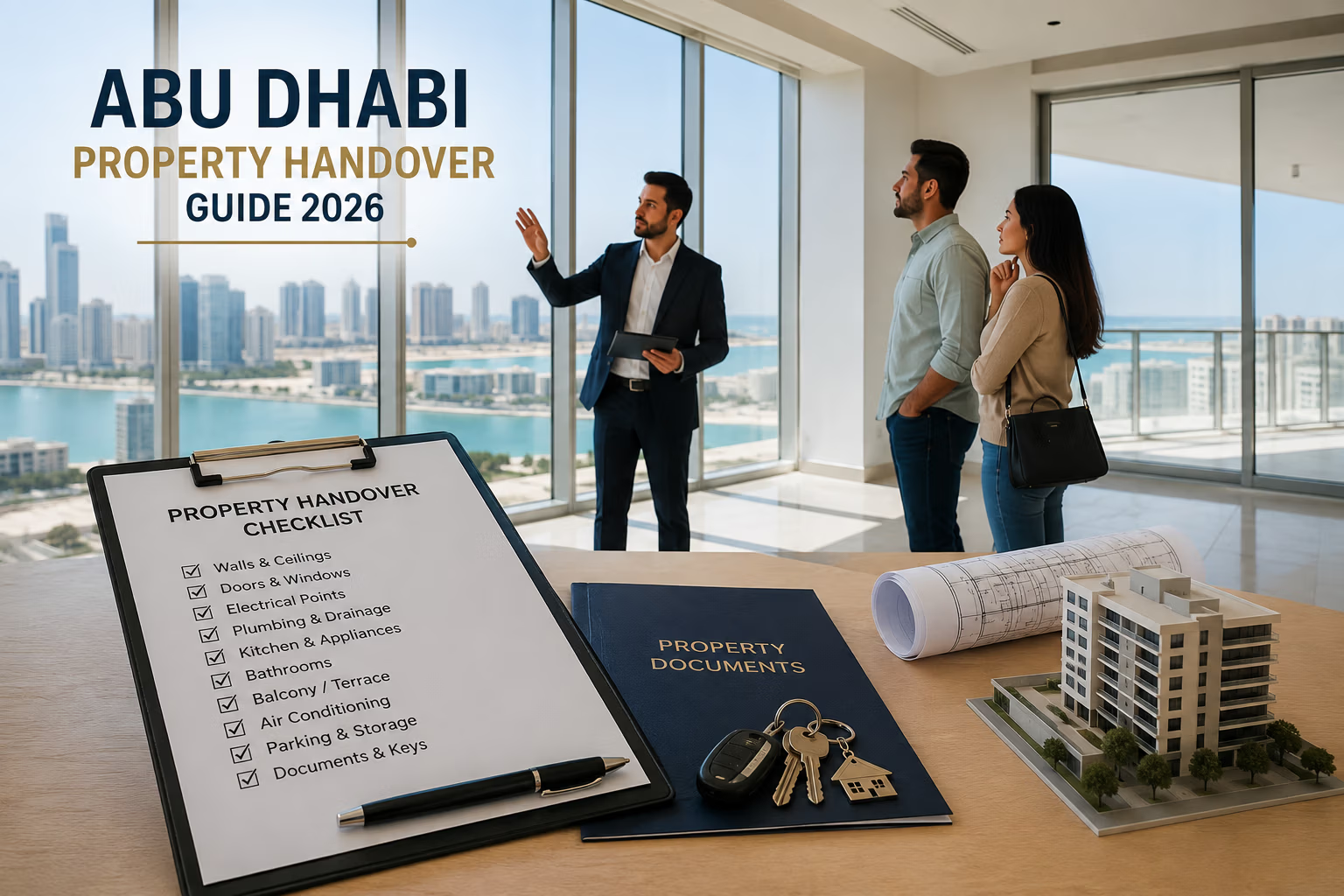
Buying a property in Abu Dhabi is exciting, but the handover stage deserves just as much attention as the purchase itself.
This is the point where the property moves from a contract, floor plan or construction site into something you can actually inspect, occupy, rent or manage.
For buyers of new-build and off-plan properties, handover should never be treated as simply:
sign the papers, collect the keys and leave.
A proper handover involves checking the condition of the unit, reviewing documentation, identifying defects, confirming utilities and access, understanding service charges, and making sure the property being delivered is reasonably consistent with what you agreed to buy.
Under Abu Dhabi’s current real-estate framework, project handover follows completion certification. ADREC states that once a developer receives the relevant Certificate of Completion, the official handover process can begin, including snagging with buyers, title deed issuance, appointment of an approved community manager and submission of the service-charge budget.
This 2026 guide explains exactly what Abu Dhabi property buyers should check before accepting their home.
Quick Answer: What Should You Check at Property Handover in Abu Dhabi?
Before accepting a property in Abu Dhabi, check four things carefully:
The property itself — construction quality, finishes, plumbing, electrical systems, cooling, doors, windows, kitchen, bathrooms, balcony and included fixtures.
The documents — handover notice, SPA, completion information, ownership documents, payment records and warranties where applicable.
The allocations — parking, storage, access cards and any other rights attached to the unit.
The ongoing obligations — service charges, community management, utilities, maintenance and any outstanding payments.
For a newly completed property, conducting a formal snagging inspection before final acceptance is one of the most important steps a buyer can take.
1. What Is Property Handover?
Property handover is the stage at which a completed property is formally delivered to the buyer.
Depending on the development and transaction, this may involve:
- receiving a handover notice;
- settling applicable outstanding amounts;
- inspecting the property;
- preparing a snagging list;
- rectification of identified defects;
- signing handover documentation;
- receiving keys and access cards;
- confirming parking or storage allocations;
- issuing or finalizing ownership documentation; and
- assuming responsibility for the property.
For off-plan buyers, this represents the transition from construction-stage ownership to physical possession.
ADREC’s 2026 developer journey specifically identifies snagging and title deed issuance as part of the official project-handover process after completion certification.
2. Do Not Confuse Project Completion With Perfect Condition
A completion certificate is important.
But it does not necessarily mean that every individual apartment or villa will be completely free from minor defects.
The completion process concerns the development’s regulatory and construction status.
Your inspection concerns your specific property.
That distinction matters.
A unit can form part of a completed building while still containing issues such as:
- poorly aligned doors;
- damaged paint;
- loose fittings;
- cracked tiles;
- leaking taps;
- defective sockets;
- poor silicone sealing;
- scratched glass;
- incomplete cabinetry;
- drainage problems; or
- cooling problems.
That is why buyers should inspect the individual unit rather than relying solely on the fact that the project has reached completion.
3. Read Your Sale and Purchase Agreement Before Handover
Before visiting the property, reopen your SPA.
Do not rely on your memory of the sales presentation.
Look specifically for provisions covering:
- unit number;
- floor;
- layout;
- approximate area;
- specifications;
- finishes;
- included fixtures;
- completion;
- handover;
- payment obligations;
- notices;
- defect liability;
- warranties;
- parking;
- storage;
- common facilities; and
- buyer and developer responsibilities.
The SPA should be your reference point when evaluating what has actually been delivered.
For off-plan transactions, Abu Dhabi requires the relevant Sale and Purchase Agreement to be registered under the applicable regulatory framework.
Al Zaeem Buyer Tip
Take your SPA, floor plan and specification sheet with you during the inspection.
Do not inspect the property based only on whether it looks nice.
Compare what was delivered against what you contracted to purchase.
4. Confirm the Official Handover Notice
Do not treat an informal message from a sales representative as the entire handover process.
Review the formal developer notice carefully.
It should tell you what actions are required before or during handover.
Depending on the development, you may be asked to:
- settle outstanding installments;
- pay applicable charges;
- submit identification;
- book a handover appointment;
- complete inspection procedures;
- sign documentation; or
- arrange utility-related requirements.
Keep a copy of all notices and correspondence.
Abu Dhabi regulations provide that when a delivered property is a building or part of one, the developer must notify the buyer of the handover date and the date of the municipality-issued building works completion certificate.
That makes formal documentation especially important.
5. Verify the Property You Are Inspecting
This sounds obvious, but check it.
Confirm:
- development name;
- building;
- tower or villa number;
- unit number;
- floor;
- orientation;
- layout;
- parking number;
- storage allocation; and
- any associated property rights.
For larger developments with similar floor plans, buyers should not assume the unit presented to them is automatically the exact property described in their transaction documents.
6. Compare the Layout With the Approved Floor Plan
Walk through the property with the floor plan.
Look at:
- room positions;
- door locations;
- balcony configuration;
- kitchen layout;
- bathroom placement;
- utility spaces;
- storage areas; and
- overall configuration.
Minor construction tolerances may occur, but any material difference should be investigated before acceptance.
If something appears substantially different from your contracted unit, document it and ask for clarification.
7. Inspect Walls and Ceilings
Begin with the basics.
Look carefully for:
- cracks;
- uneven finishing;
- visible repairs;
- water marks;
- dampness;
- discoloration;
- peeling paint;
- damaged corners;
- poor plastering; and
- unfinished areas.
Use natural light wherever possible.
Some defects become much more visible when viewed from an angle rather than directly in front of the wall.
8. Check Every Floor Surface
Inspect:
Tiles
Look for:
- cracks;
- chips;
- uneven installation;
- excessive gaps;
- poor grout;
- hollow-sounding tiles; and
- staining.
Wooden or Laminate Flooring
Look for:
- scratches;
- gaps;
- lifting;
- uneven sections;
- moisture damage; and
- poor edge finishing.
Stone or Marble
Check:
- cracks;
- chips;
- staining;
- polishing consistency; and
- joints.
Do not assume a small flooring defect is insignificant.
If several tiles or boards need replacement later, matching the original finish may become difficult.
9. Open and Close Every Door
Test every interior and exterior door.
Check:
- alignment;
- hinges;
- locks;
- handles;
- frames;
- closing mechanism;
- scratches;
- gaps;
- door stops; and
- seals.
A properly installed door should open and close smoothly without scraping the floor or frame.
Also inspect:
- entrance door;
- balcony doors;
- bathroom doors;
- bedroom doors;
- utility doors; and
- built-in wardrobe doors.
10. Check Every Window
Windows are particularly important in Abu Dhabi because poor sealing can affect:
- cooling efficiency;
- dust penetration;
- noise;
- moisture; and
- indoor comfort.
Check:
- glass condition;
- scratches;
- cracks;
- locks;
- handles;
- frame alignment;
- seals;
- opening mechanism; and
- visible gaps.
If the unit is in a high-rise building, do not attempt anything unsafe during inspection.
11. Test the Air-Conditioning System
Cooling is not a minor feature in the UAE.
Turn the system on.
Check:
- whether all rooms cool properly;
- thermostat operation;
- airflow;
- unusual noises;
- odors;
- condensation;
- vents;
- visible leaks; and
- responsiveness to temperature settings.
If the development uses district cooling or another centralized system, understand how the service will be activated and billed.
12. Test Every Light Switch and Electrical Point
Bring a simple socket tester or use a qualified inspector.
Check:
- light switches;
- electrical sockets;
- kitchen power points;
- bathroom points;
- appliance connections;
- data points;
- doorbell;
- intercom; and
- installed smart-home controls where applicable.
Look for:
- loose sockets;
- damaged faceplates;
- switches that do not work;
- exposed wiring; and
- incomplete installations.
13. Check Plumbing Carefully
Plumbing defects can become expensive very quickly.
Turn on every tap.
Flush every toilet.
Use every shower.
Check:
- water pressure;
- hot and cold water;
- drainage speed;
- leaks;
- loose fittings;
- under-sink connections;
- shower seals;
- toilet stability;
- visible pipework; and
- drainage odors.
Run water for long enough to reveal slow drainage or leaks.
Do not simply turn a tap on for two seconds and assume everything is fine.
14. Inspect Bathrooms for Waterproofing Indicators
You cannot fully inspect hidden waterproofing without specialist testing, but you can look for warning signs.
Check:
- grout;
- silicone;
- shower edges;
- bathtub edges;
- floor slope;
- pooling water;
- moisture marks;
- loose sanitary fittings; and
- ventilation.
Water should drain toward the intended outlet rather than accumulate in corners.
15. Inspect the Kitchen
The kitchen contains several systems in one place.
Check:
- cabinets;
- hinges;
- drawers;
- countertops;
- sink;
- tap;
- drainage;
- backsplash;
- electrical points;
- appliance spaces;
- extractor hood;
- lighting; and
- included appliances.
Open every cabinet.
Test every drawer.
Look underneath the sink.
If appliances are included in the SPA, verify their presence and condition.
16. Check Built-In Wardrobes and Storage
Inspect all fitted storage.
Look for:
- door alignment;
- handles;
- shelves;
- drawers;
- internal finishing;
- damage;
- moisture;
- lighting where applicable; and
- missing fittings.
Built-in joinery defects are easier to document before moving furniture into the property.
17. Inspect the Balcony or Terrace
If the property has outdoor space, check:
- flooring;
- drainage;
- railings;
- glass;
- walls;
- waterproofing indicators;
- lighting;
- doors;
- drainage outlets; and
- overall finishing.
Make sure the area drains properly.
Standing water can become a significant maintenance issue.
18. Verify the View — But Be Realistic
Many Abu Dhabi properties are marketed on the basis of:
- sea views;
- golf views;
- canal views;
- skyline views;
- park views; or
- community views.
At handover, confirm the actual orientation.
However, buyers should distinguish between:
what is physically delivered and what may change around the property in the future.
Unless something is contractually guaranteed, surrounding development can evolve over time.
A current open view is not automatically a permanent protected view.
19. Confirm Parking
Verify:
- parking-space number;
- location;
- access route;
- size;
- access card;
- barriers; and
- whether the allocation matches your documents.
For villas, check the garage or driveway arrangements.
For apartments, physically locate the parking space rather than merely accepting a number on paper.
20. Confirm Storage Allocation
If the purchase includes a storage unit, verify:
- location;
- number;
- access;
- dimensions where relevant;
- lock;
- condition; and
- ownership or usage documentation.
Storage is often forgotten during handover because buyers focus almost entirely on the apartment itself.
21. Check Common Areas
Your investment does not stop at your front door.
Inspect what you reasonably can access, including:
- lobby;
- lifts;
- corridors;
- parking;
- swimming pool;
- gym;
- landscaping;
- children’s areas;
- community facilities;
- access systems;
- refuse areas; and
- entrances.
This matters because buyers in jointly owned developments contribute to common-property costs through the applicable service-charge framework.
ADREC regulates jointly owned properties, community management and service-charge administration in Abu Dhabi.
22. Understand Service Charges Before Signing Off
Ask for clarity on:
- approved service charges;
- billing period;
- amount due;
- payment method;
- what the charges cover;
- community management;
- reserve or maintenance components where applicable; and
- when your liability begins.
Do not evaluate service charges only as a small administrative issue.
For investors, they directly affect net yield.
For owner-occupiers, they form part of the real annual cost of living in the property.
ADREC’s owner-association ecosystem covers budgets, invoices and service charges for jointly owned developments.
23. Prepare a Snagging List
A snagging list is a written record of defects or incomplete items identified during inspection.
Each snag should ideally include:
- location;
- description;
- photograph;
- severity;
- reference number; and
- date identified.
Example:
Bedroom 2 — Balcony door does not lock correctly — Photo 14.
This is far more useful than writing:
“Door problem.”
Clear documentation reduces ambiguity.
24. Take Photographs and Videos
Document the unit before taking possession.
Photograph:
- each room;
- walls;
- floors;
- ceilings;
- appliances;
- meters;
- doors;
- windows;
- balconies;
- defects;
- parking; and
- access items.
This creates a dated visual record of the property’s condition at handover.
For landlords, this can also become useful later when establishing the property’s baseline condition before the first tenancy.
25. Should You Hire a Professional Snagging Company?
For many buyers, particularly overseas investors, the answer can be yes.
A professional property inspector may identify issues that an ordinary buyer misses.
Depending on scope, professional snagging may examine:
- finishing;
- electrical systems;
- plumbing;
- cooling;
- thermal anomalies;
- moisture;
- doors and windows;
- drainage;
- cabinetry; and
- general construction quality.
However, use a competent provider and understand exactly what the inspection includes.
A snagging report is useful only if the inspection itself is thorough.
26. What Happens After You Submit the Snagging List?
The exact process depends on the developer and your contract.
Typically, the defects are documented and the developer or contractor is given an opportunity to rectify them.
You may then conduct a reinspection.
During reinspection:
- bring the original snagging list;
- verify every item individually;
- mark corrected items;
- photograph incomplete items again;
- record any new damage; and
- keep the updated report.
Do not assume that because an item is marked “completed” administratively, it has been rectified correctly.
Inspect it.
27. Understand Developer Liability for Defects
Abu Dhabi’s real-estate regulatory framework contains provisions addressing developer liability for defects in real-estate units and jointly owned property following handover. ADREC provides a dedicated Real Estate Unit Handover advisory service covering this subject under Law No. 3 of 2015.
The exact rights and time periods applicable to a specific defect can depend on:
- type of defect;
- property;
- contractual provisions;
- applicable law; and
- circumstances.
Therefore, buyers should not assume that every issue has the same warranty period.
For a material defect or dispute, review the SPA and obtain qualified professional advice where necessary.
28. Do Not Sign Documents You Do Not Understand
Handover can involve several forms.
Before signing, understand whether a document confirms:
- receipt of keys;
- physical possession;
- unit condition;
- acceptance of defects;
- settlement of payments;
- service-charge obligations;
- utility responsibilities; or
- waiver of any rights.
If something is unclear, ask before signing.
For a substantial legal or financial concern, seek qualified advice.
29. Verify Your Title and Ownership Documentation
Handover and ownership registration are related, but buyers should make sure their formal property documentation is in order.
ADREC currently provides services for issuing:
- title deeds;
- property ownership certificates;
- verification certificates;
- valuation certificates; and
- related property documentation.
Store your ownership documents permanently.
They will matter later if you:
- rent;
- mortgage;
- refinance;
- sell;
- gift;
- transfer; or
- deal with inheritance.
30. Check Every Key, Card and Access Credential
Before leaving, count what you receive.
Depending on the property, this may include:
- main-door keys;
- spare keys;
- mailbox keys;
- parking remotes;
- building cards;
- lift cards;
- community cards;
- gym access;
- pool access;
- storage keys; and
- smart-home credentials.
Make a written inventory.
31. Record Utility Meter Readings
Where applicable, record:
- electricity meter;
- water meter;
- cooling meter; and
- other relevant readings.
Take photographs.
This gives you a clear starting point from the date possession transfers.
32. Understand Utility Activation
Before moving in or renting the property, determine what needs to be activated.
Depending on the development, this could involve:
- electricity;
- water;
- cooling;
- internet;
- gas where applicable;
- building access; and
- community systems.
Ask which services are already active and which must be transferred or registered in your name.
33. Ask About Move-In Procedures
Some apartment developments require owners or tenants to follow a formal move-in process.
This may involve:
- booking a date;
- obtaining permission;
- reserving a service lift;
- protecting common areas;
- providing mover details; or
- complying with community timings.
Do not schedule movers before checking community procedures.
34. Collect Manuals and Warranties
Ask for any available:
- appliance warranties;
- equipment manuals;
- smart-home instructions;
- cooling information;
- access-system instructions;
- maintenance schedules; and
- developer warranty documents.
These may save considerable time later.
35. Understand What the Community Manager Does
For jointly owned developments, the community manager may become an important contact after handover.
ADREC requires developers, as part of project handover, to appoint an ADREC-approved community manager and submit the service-charge budget.
The management structure may deal with matters such as:
- common areas;
- maintenance;
- building operations;
- access;
- community notices;
- service charges; and
- owner communications.
Save the relevant contact details immediately.
36. What If You Find Serious Defects?
Do not rely on verbal conversations.
Document the issue formally.
Depending on severity:
- photograph and video the defect;
- report it through the developer’s formal channel;
- retain acknowledgement;
- refer to the SPA;
- request rectification;
- obtain an independent technical assessment if necessary; and
- seek legal advice for a serious unresolved dispute.
ADREC provides advisory and regulatory services concerning real-estate unit handover and developer liability for defects.
37. Can You Refuse Handover?
This is not a question that should be answered generically with a simple yes or no.
Whether a buyer can lawfully refuse or defer acceptance depends on matters including:
- the SPA;
- severity of defects;
- whether contractual completion requirements have been satisfied;
- nature of outstanding works;
- regulatory status; and
- applicable law.
A few cosmetic defects and a materially incomplete property are not necessarily equivalent situations.
If the dispute is substantial, obtain legal advice before withholding performance under the contract.
38. What If the Property Is Smaller Than Expected?
Check the SPA and official property documentation.
Off-plan properties may involve provisions dealing with area measurements and variations.
Do not calculate a legal entitlement based simply on your own measurements.
If the difference appears material:
- obtain professional measurement;
- compare it with the registered documentation;
- review contractual terms; and
- seek advice where necessary.
39. What If the Property Is Not Ready?
There is a difference between:
minor snagging and a unit that is not reasonably ready for handover.
Examples of potentially significant issues include:
- major unfinished construction;
- essential systems not functioning;
- significant water ingress;
- serious safety concerns;
- inaccessible property;
- substantial deviations; or
- incomplete critical installations.
Document the condition carefully.
If necessary, obtain an independent report.
40. Handover for Overseas Buyers
You do not necessarily need to personally manage every Abu Dhabi real-estate transaction.
ADREC’s current service ecosystem includes authorization mechanisms allowing a trusted legal representative to perform certain real-estate transactions on another person’s behalf.
For an overseas buyer, a practical handover strategy can include:
- appointing an authorized representative where appropriate;
- hiring an independent snagging company;
- receiving digital inspection reports;
- arranging property management;
- maintaining digital records; and
- verifying all financial instructions independently.
Remote handover requires more documentation, not less.
41. Handover for Investors Who Plan to Rent Immediately
If the property will be leased rather than occupied, use handover to prepare it for the rental market.
After snagging:
- complete rectification;
- deep clean the unit;
- photograph it professionally;
- confirm rental pricing;
- determine furnished vs unfurnished strategy;
- appoint a licensed real-estate professional;
- prepare access arrangements;
- establish maintenance procedures; and
- organize tenancy documentation.
Abu Dhabi provides formal lease-registration services through ADREC’s real-estate system.
The aim should be to move efficiently from handover → market-ready → tenant-ready.
42. Handover for Owner-Occupiers
If you intend to live in the property, prioritize:
- utilities;
- cooling;
- security;
- internet;
- access;
- parking;
- move-in permissions;
- appliance setup;
- maintenance contacts; and
- community rules.
Do not move furniture into the unit until major snagging issues have been resolved if those repairs could damage or obstruct your belongings.
43. Handover for Villas Requires Extra Attention
Villa inspections should include everything already discussed plus:
- external walls;
- roof-access areas where safely inspectable;
- garden;
- irrigation;
- external drainage;
- boundary walls;
- gates;
- garage;
- swimming pool;
- outdoor lighting;
- landscaping;
- external taps;
- terraces; and
- mechanical equipment.
For waterfront or golf-front villas, environmental exposure can make exterior detailing, drainage, waterproofing and glazing particularly important.
44. Handover for Apartments Requires Common-Area Review
Apartment owners should pay attention to:
- lifts;
- fire exits;
- lobby;
- corridors;
- parking;
- access control;
- gym;
- pool;
- refuse facilities;
- loading areas;
- security; and
- building management.
A beautiful apartment inside a poorly managed building can become a difficult investment.
The unit and the development should therefore be evaluated together.
45. The 30-Point Abu Dhabi Handover Checklist
Before accepting possession, confirm:
- Correct unit
- Correct layout
- Walls inspected
- Ceilings inspected
- Flooring checked
- Tiles checked
- Doors tested
- Windows tested
- Locks tested
- AC tested
- Thermostats checked
- Electrical outlets tested
- Light switches tested
- Plumbing tested
- Toilets tested
- Drainage checked
- Bathrooms inspected
- Kitchen inspected
- Appliances verified
- Cabinets inspected
- Wardrobes inspected
- Balcony inspected
- Parking confirmed
- Storage confirmed
- Common areas reviewed
- Defects photographed
- Snagging report submitted
- Service charges understood
- Keys/access cards counted
- Ownership and handover documents stored
Should You Accept the Property With Minor Snags?
Minor defects do not necessarily mean the entire handover must stop.
The better question is:
Are the defects properly documented, and is there a clear process for rectification?
Examples of relatively minor snagging may include:
- small paint defects;
- minor silicone issues;
- slight cabinet alignment problems; or
- cosmetic scratches.
More serious concerns may include:
- water leakage;
- major electrical problems;
- severe cooling failure;
- material structural issues;
- substantial incomplete works; or
- significant contractual discrepancies.
Treat the two categories differently.
Property Handover Mistakes Buyers Should Avoid
The most common mistakes include:
Accepting the unit without inspecting it.
Rushing because the developer says keys are ready.
Inspecting without the SPA or floor plan.
Failing to photograph defects.
Submitting vague snagging comments.
Not reinspecting completed repairs.
Ignoring parking and storage allocations.
Not understanding service charges.
Signing documents without reading them.
Assuming a new property cannot have defects.
Not keeping copies of handover records.
A few additional hours of care at handover can prevent months of frustration later.
Frequently Asked Questions
What does property handover mean in Abu Dhabi?
Property handover is the formal process through which a completed property is delivered to the buyer. It typically involves inspection, snagging, documentation, access and transfer into the owner’s possession.
Should I inspect a new apartment before accepting it?
Yes. New properties can still contain construction or finishing defects. ADREC’s current project-handover framework expressly includes snagging with buyers.
What is snagging?
Snagging is the inspection process used to identify defects, incomplete works or finishing problems before or around property handover.
Can I hire someone to inspect the property for me?
Yes. Many buyers use independent professional inspectors, especially for larger properties or when purchasing from overseas.
Should I take photos during handover?
Yes. Photographs create a clear record of defects and the property’s condition when possession changes hands.
What documents should I bring?
Bring your SPA, floor plan, specification documents, identification, developer handover notice and any other documents requested for the appointment.
Do I receive a title deed at handover?
Title deed issuance forms part of ADREC’s project-handover framework, although the exact sequence and documentation can depend on the transaction.
What if I find defects after handover?
Report them promptly through the applicable developer or management process and retain evidence. Abu Dhabi’s regulatory framework addresses developer liability for certain defects following handover.
Should I check service charges before accepting the property?
Yes. Service charges form part of the ongoing ownership cost in jointly owned developments and are regulated through ADREC’s community-management framework.
Can an overseas buyer complete handover remotely?
Depending on the transaction, representation may be possible. ADREC offers authorization services for trusted legal representatives to perform applicable property transactions.
Final Handover Rule: Inspect First, Accept Second
Property handover should not feel adversarial.
The developer wants to deliver the property.
The buyer wants to receive it.
But both sides benefit when the condition of the property is clearly documented.
The safest sequence is:
Review → Inspect → Record → Rectify → Reinspect → Accept → Protect your records.
Abu Dhabi’s current regulatory framework formally incorporates completion certification, snagging, title deed issuance and community-management arrangements into the development handover journey.
That means handover is not a ceremonial key collection.
It is an important property transaction stage.
For buyers, this is the moment to make sure the home or investment you are taking possession of is properly documented, carefully inspected and ready for the next phase of ownership.
Need Help With an Abu Dhabi Property?
Whether you are buying off-plan, approaching handover, preparing an investment property for rent or looking for your next home, Al Zaeem Real Estate can help you evaluate your options throughout the property journey.
Speak with Al Zaeem Real Estate about your Abu Dhabi property requirements.
Last reviewed: August 2026.
This guide provides general information only and does not constitute legal, technical, financial or investment advice. Contract terms, developer procedures and regulatory requirements can differ by transaction. Buyers should verify requirements applicable to their property and obtain qualified professional advice where necessary.