


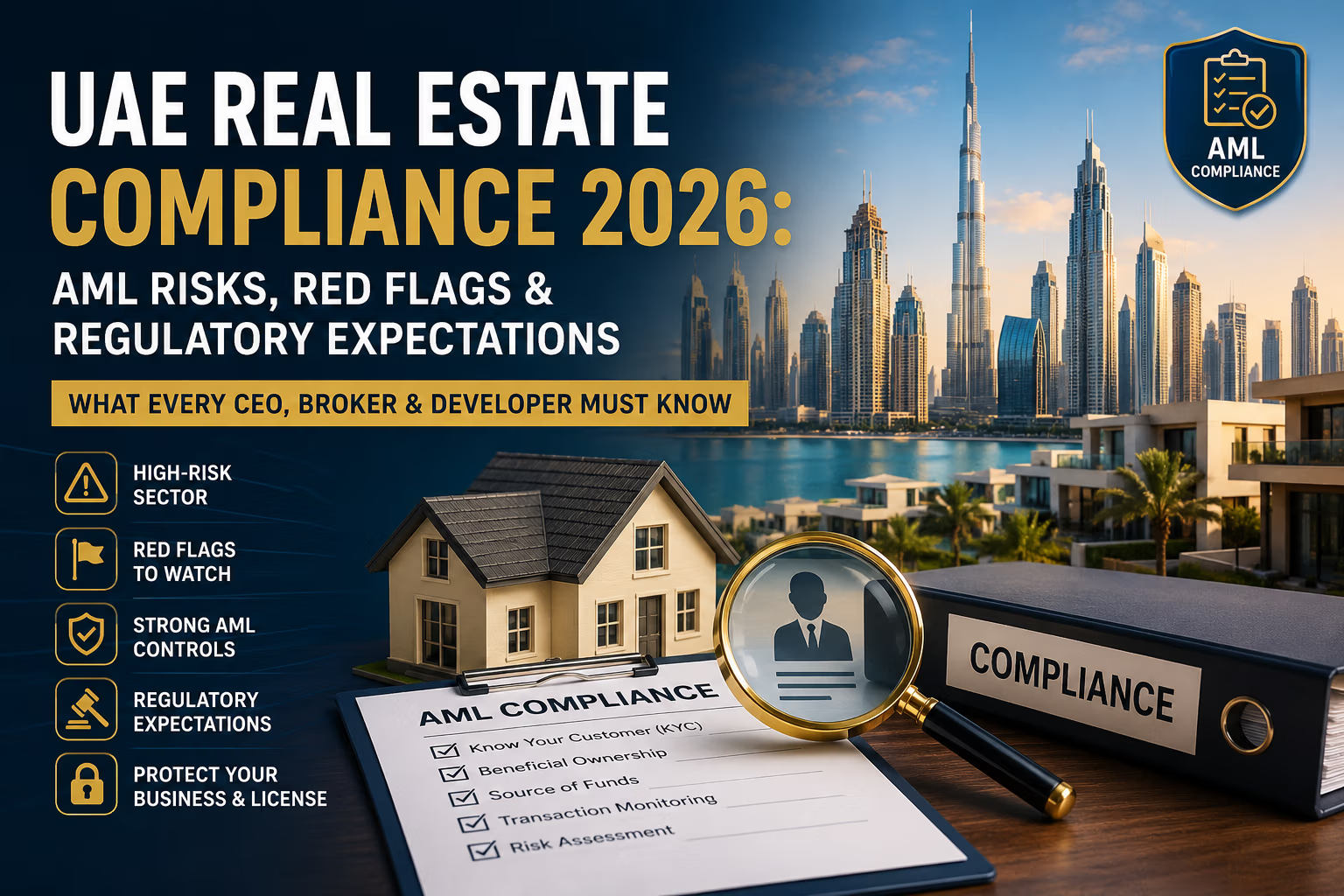
UAE Real Estate Compliance in 2026: Why AML Controls Are Now a Business Survival Requirement
The UAE real estate sector continues to be one of the most attractive investment destinations globally, drawing in capital from Europe, Asia, Africa, and beyond. With mega developments, luxury waterfront communities, and high rental yields, the market shows no signs of slowing down.
But beneath this growth, a different reality is becoming increasingly important for every broker, developer, and property firm operating in the UAE.
Regulatory pressure around Anti-Money Laundering (AML) compliance is intensifying — and real estate remains one of the most closely monitored sectors in the country.
According to the UAE’s latest National Risk Assessment (NRA), real estate continues to be classified as a high-risk sector for money laundering and terrorist financing exposure. This classification is not theoretical. It is based on enforcement data, suspicious transaction reporting trends, and cross-border financial investigations.
For CEOs, compliance officers, and real estate executives, this shift is redefining how business is done.
AML is no longer a back-office function. It is now a core business requirement.
Why UAE Real Estate Continues to Attract Financial Crime Risks
Real estate naturally carries characteristics that make it vulnerable to misuse in financial crime schemes.
Large transaction values, asset-based wealth storage, and cross-border ownership structures create an environment where illicit funds can be integrated into the legitimate economy if controls are weak.
The NRA highlights several structural vulnerabilities:
- High-value property transactions with large capital movement
- Cross-border investor participation
- Complex ownership structures involving companies and intermediaries
- Variability in documentation quality across transactions
- Opportunities for rapid resale and value manipulation
Importantly, risk is not limited to luxury developments. Even mid-market apartments and off-plan units can be used in layering or integration stages of money laundering cycles.
The key issue is not the property itself — it is the transparency of the transaction.
Evolving Money Laundering Techniques in UAE Real Estate
Criminal typologies are becoming more sophisticated, especially as regulatory oversight increases.
Below are the most common methods currently flagged by regulators and compliance frameworks.
1. Layered Corporate Ownership Structures
One of the most persistent risks is the use of layered legal entities to obscure ownership.
Instead of purchasing property directly, buyers may use:
- Offshore companies
- Holding structures in multiple jurisdictions
- Nominee shareholders
- Trust arrangements
This creates a chain of ownership that makes it difficult to identify the real controller of the asset.
The UAE regulatory expectation is clear: firms must identify the Ultimate Beneficial Owner (UBO) — not just the legal purchaser.
Failure to do so is now considered a serious compliance gap.
2. Third-Party Payments and Indirect Funding
Another growing concern is the use of third-party funding sources.
This includes situations where:
- Payments come from unrelated individuals or companies
- Family members fund transactions without clear explanation
- Business accounts are used for personal property purchases
- Funds are routed through multiple intermediaries
These patterns can indicate attempts to distance illicit funds from their origin.
Compliance teams are expected to verify whether the payer and the buyer are logically and financially connected.
If not, enhanced due diligence is required.
3. Rapid Resale and Artificial Price Movement
Short-term flipping of properties can be legitimate — but it also creates opportunities for manipulation.
The NRA and enforcement trends highlight risks such as:
- Properties resold multiple times within short periods
- Sudden price inflation without market justification
- Back-to-back transactions involving related parties
- Off-market deals with inconsistent valuations
These patterns may indicate layering, where illicit funds are cycled through assets to create a false financial history.
Transaction monitoring systems are now expected to detect abnormal resale patterns.
4. Weak or Inconsistent Source of Wealth Verification
One of the most critical AML failures in real estate is inadequate Source of Wealth (SoW) documentation.
High-risk indicators include:
- Clients unable to explain long-term wealth accumulation
- Generic or unsupported income claims
- Lack of verifiable business background
- Inconsistent financial documentation
Regulators expect firms to understand not only where the money came from — but how the client accumulated wealth over time.
Without this, risk exposure increases significantly.
5. High-Risk Jurisdictions and Sanctions Exposure
International buyers are a key part of the UAE market, but they also increase compliance obligations.
Risk increases when transactions involve:
- High-risk or non-cooperative jurisdictions
- Sanctioned individuals or entities
- Politically Exposed Persons (PEPs)
- Offshore financial secrecy jurisdictions
Screening against sanctions lists and PEP databases is now a minimum requirement, not an advanced control.
Real estate firms are expected to demonstrate ongoing monitoring — not one-time checks.
6. Misuse of Rental and Leasing Structures
AML risks do not end at the point of sale.
Illicit funds can be integrated into the economy through:
- Inflated rental agreements
- Long-term lease structuring with unusual payment flows
- Property upgrades funded by unexplained capital
- Transfers between related parties disguised as market activity
Rental income creates a continuous cash flow mechanism that can be misused to legitimize illicit funds over time.
This is why post-transaction monitoring is increasingly important.
Regulatory Direction in 2025: What Is Changing
The UAE regulatory environment is becoming more data-driven and enforcement-focused.
Authorities are increasingly relying on:
- Suspicious Transaction Reports (STRs) via goAML
- Real-time financial intelligence sharing
- Cross-border cooperation with global regulators
- On-site AML inspections and audits
Businesses that cannot demonstrate structured compliance processes face higher risk of penalties, license restrictions, or reputational damage.
The expectation is no longer just compliance — it is demonstrable compliance maturity.
What Real Estate Leadership Must Prioritize Now
AML responsibility sits directly with senior leadership.
For CEOs, the key shift is accountability. Regulators now expect leadership to actively oversee compliance frameworks, not delegate them entirely.
For Executive Leadership:
- Treat AML as a core business risk, not a compliance task
- Ensure clear governance and escalation structures
- Invest in proper compliance infrastructure and training
- Monitor high-risk transactions at board or senior level
Regulatory gaps are increasingly treated as management failures, not operational errors.
For Compliance Teams:
Compliance officers must align internal systems with NRA-identified risk areas.
Essential capabilities include:
- Strong UBO verification processes
- Real-time sanctions and PEP screening
- Structured SoF and SoW documentation workflows
- Automated transaction monitoring systems
- Suspicious activity escalation procedures
- Audit-ready record keeping
The ability to produce clear documentation during inspections is often the deciding factor in regulatory outcomes.
The New Reality of UAE Real Estate Compliance
The UAE real estate market remains highly attractive — but it is now operating in one of the most closely regulated financial environments in the region.
The message from regulators is consistent:
Risk is known. Expectations are clear. Enforcement is increasing.
For real estate firms, this means compliance is no longer a supporting function. It is part of operational survival.
Businesses that adapt early will build trust, stability, and long-term investor confidence.
Those that don’t will eventually face pressure — not from the market, but from regulators.